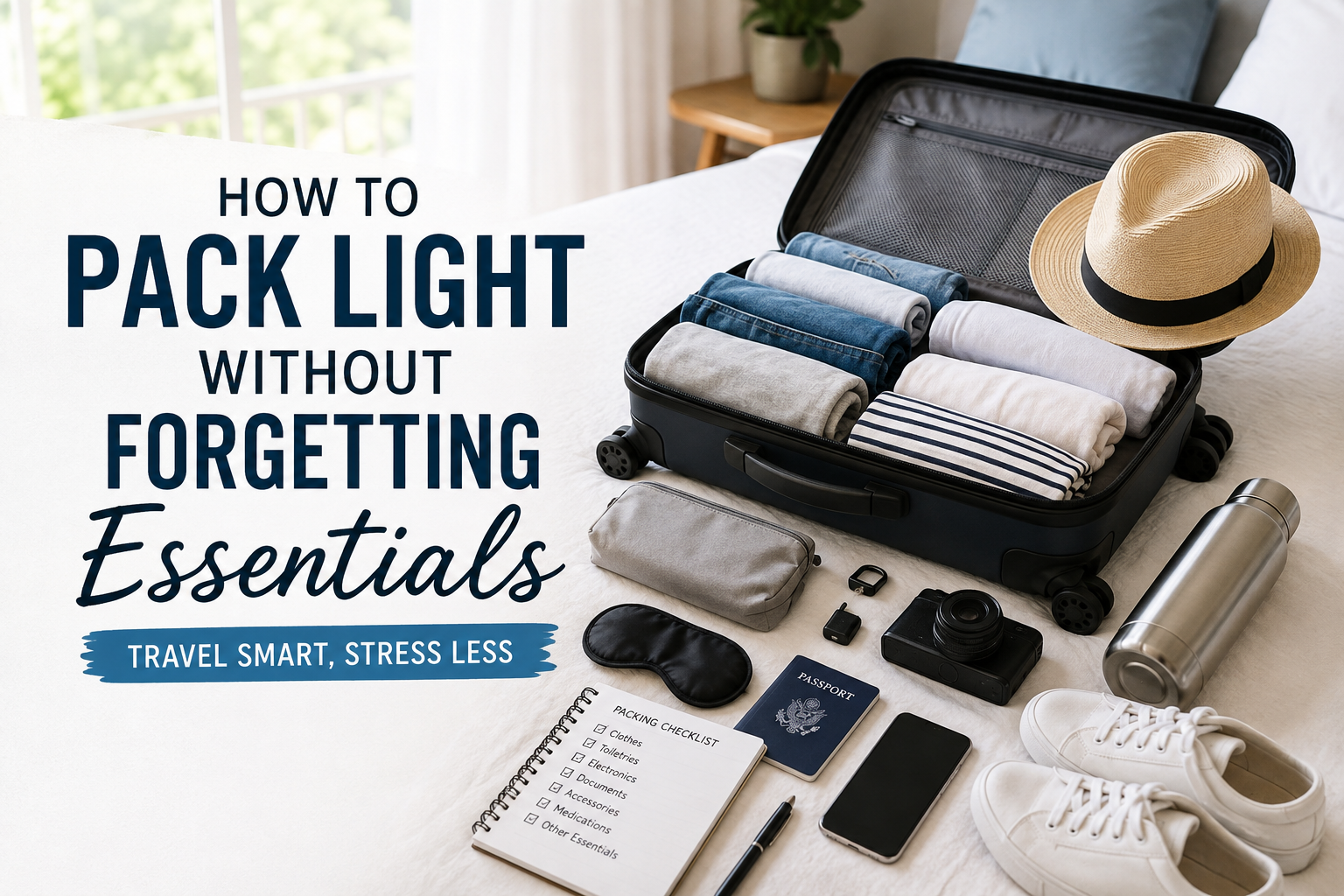
Packing for a trip can sometimes feel harder than the trip itself. I have often found myself standing in front of an open suitcase, wondering what I really need and what I am simply packing because I think I might need it. The problem is that overpacking makes travel tiring. A heavy suitcase is difficult to carry, takes more time to organize, and can make moving from one place to another stressful.
At the same time, packing too little can create its own problems. Forgetting important documents, comfortable clothes, personal items, or useful travel accessories can make a trip uncomfortable. That is why I believe the best approach is to learn how to pack light without forgetting essentials.
In this guide, I will share the practical packing methods I use to keep my luggage light while still carrying the things that matter.
Start With a Simple Packing Plan
Before putting anything into your suitcase, take a few minutes to make a packing plan. I find this much easier than picking things randomly from my wardrobe.
First, think about the length of your trip, the weather at your destination, the activities you will do, and the type of accommodation you will use. A three day city trip requires very different packing from a week long outdoor adventure.
I also recommend checking the weather forecast before packing. If you know the expected temperature and weather conditions, you can avoid taking clothes that you probably will not wear.
The goal is not to pack everything that could possibly be useful. The goal is to pack what you are realistically going to use.
Choose Clothes That Work Together
Clothing usually takes up most of the space in a suitcase, so this is where I focus most of my attention when trying to pack light.
Instead of packing a separate outfit for every day, choose clothes that can be mixed and matched. Neutral colors and simple designs make this much easier because one shirt can work with different trousers or jeans.
For a short trip, I usually prefer a small selection of comfortable shirts, one or two pairs of trousers, underwear, socks, sleepwear, and a light outer layer if the weather requires it.
The most important question I ask myself is simple: Can I wear this item more than once?
If the answer is no, I seriously consider leaving it at home unless it is something necessary for a specific occasion.
Follow the One Week Rule
One of my favorite ways to avoid overpacking is to use what I call the one week rule. Even when traveling for longer than a week, you often do not need a completely different outfit for every day.
If you can wash your clothes during the trip, you can pack enough clothing for several days and reuse some items. Many hotels, apartments, and laundromats offer laundry facilities.
This method can dramatically reduce luggage weight.
For shorter trips, you can make an even simpler plan. Choose a few tops, two or three bottoms, enough underwear and socks, and one pair of comfortable shoes. Adjust these numbers according to your destination and personal needs.
Pack Toiletries Carefully
Toiletries can quickly fill a suitcase if you are not careful. Large bottles of shampoo, shower gel, lotion, and other products are often unnecessary for a short trip.
I prefer taking smaller travel sized containers when possible. You can also check whether your hotel or accommodation provides basic toiletries.
However, do not remove important personal items simply to save space. If you regularly use a specific personal care product, make sure you have enough for the entire trip.
A small toiletry bag is useful because it keeps everything together. It also makes it easier to find what you need without searching through your entire suitcase.
Keep Important Essentials Separate
One of the biggest mistakes people make when packing light is focusing so much on reducing luggage that they forget important essentials.
Travel documents should always be easy to access. Depending on your trip, this may include your passport, identification, tickets, booking information, travel insurance details, and other required documents.
I prefer keeping important documents in a small secure travel pouch rather than placing them somewhere deep inside my luggage.
If you are traveling internationally, check your destination’s entry requirements before leaving. Requirements can vary depending on the country and your circumstances.
Do Not Forget Your Everyday Essentials
Some of the most important things are the small things we use every day.
Before leaving, think about what you normally use from morning until bedtime. Your phone, charger, wallet, glasses if needed, personal care items, and any necessary medication should be considered carefully.
I recommend creating a personal essentials list instead of copying someone else’s packing list. Everyone travels differently.
For example, one person may need a camera while another only needs a smartphone. Someone may need specific study materials, while another person may need equipment for a hobby.
Pack according to your actual needs.
Limit Your Shoes
Shoes are among the heaviest and most space consuming items in luggage. This is why I try to keep my shoe collection small when traveling.
For most casual trips, one comfortable pair that I can wear during travel is often enough. If another pair is genuinely necessary, I choose something lightweight and suitable for multiple situations.
Think about the activities planned for your trip. If you are going hiking, you may need proper footwear. If you are taking a city break, comfortable walking shoes may be more useful.
The key is to avoid bringing several pairs simply because they look different.
Use Packing Cubes or Small Bags
Packing cubes can make organizing luggage much easier. They allow you to group similar items together, such as shirts, underwear, accessories, and sleepwear.
Even if you do not use packing cubes, small bags can serve a similar purpose.
I like this approach because it prevents my suitcase from becoming messy. It also helps me see exactly how much I am carrying.
The real benefit is not only saving space. It is making the suitcase easier to manage.
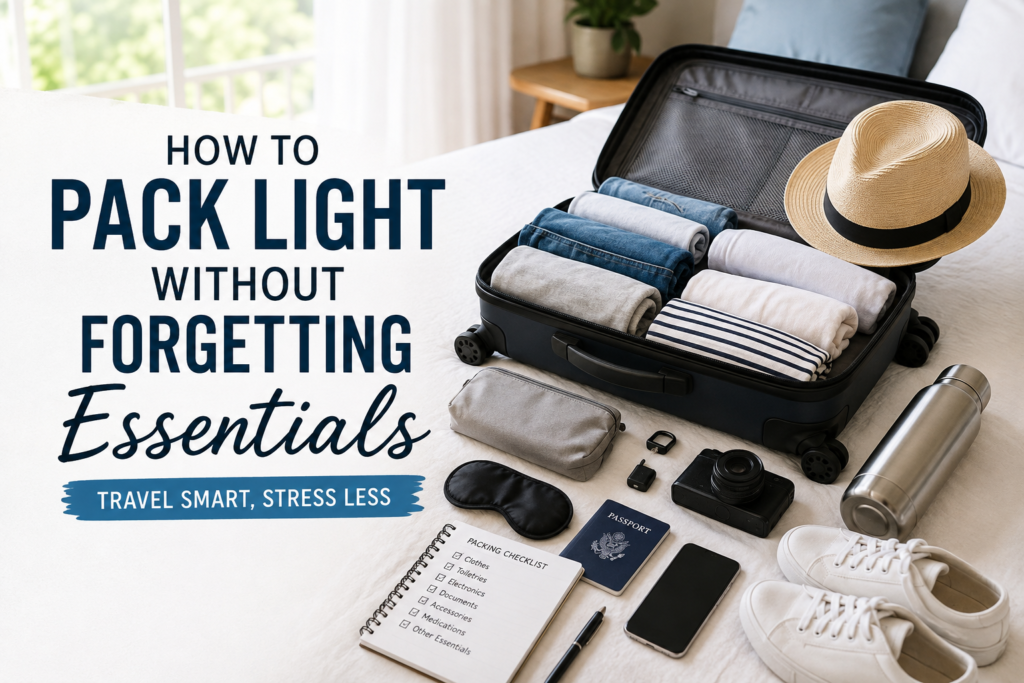
Roll or Fold Clothes Properly
There is always debate about whether clothes should be rolled or folded. From my experience, both methods can work.
Rolling can be useful for casual clothing and smaller items because it makes them easy to organize. Folding works well for shirts, trousers, and clothing that wrinkles easily.
Rather than following one method for everything, I use whichever method works best for each item.
The important thing is to avoid throwing clothes into your suitcase without a plan. Organized packing usually makes better use of available space.
Leave Some Space in Your Bag
I never recommend filling a suitcase completely before leaving home.
Leaving some empty space gives you flexibility during the trip. You may buy souvenirs, receive something from a friend, or simply need extra room because your clothes are no longer packed as neatly as they were at home.
An overfilled suitcase can also become difficult to close and carry.
A little empty space is not wasted space. It is useful space.
Think About What You Can Buy at Your Destination
Another way to pack light is to avoid carrying things that are easily available at your destination.
For example, depending on where you are traveling, basic toiletries and other everyday items may be easy to purchase locally.
This does not mean you should arrive without preparation. It simply means you should ask yourself whether carrying a large item from home is actually necessary.
If something is inexpensive, widely available, and not essential for the journey, buying a small amount at your destination may be a practical option.
Keep Electronics Simple
Electronics can add surprising amounts of weight. A phone, tablet, laptop, camera, power bank, headphones, chargers, and cables can quickly turn into a large collection.
Before packing electronics, decide what you will actually use.
For a simple holiday, your smartphone may handle photography, navigation, entertainment, communication, and travel information. There may be no reason to carry several additional devices.
I also recommend carrying only the cables and chargers you need. A small cable organizer can prevent them from becoming tangled.
Prepare a Small Travel Essentials Kit
A small travel essentials kit can save time and prevent forgotten items.
Your kit might include items such as a phone charger, headphones, travel documents, basic toiletries, a reusable water bottle, a small notebook, and other personal necessities.
The exact contents should depend on your trip.
I find it useful to prepare this kit before starting to pack clothes. Once the essential items are ready, I can focus on selecting clothing without worrying that something important will be forgotten.
Review Everything Before Closing the Suitcase
After packing, stop for a few minutes and review everything.
Ask yourself three questions.
Do I really need this?
Can I use it more than once?
Can I easily get it at my destination if necessary?
If an item does not pass any of these questions, consider leaving it behind.
This final review is one of the easiest ways to reduce unnecessary luggage.
Pack for the Trip You Are Actually Taking
A common packing mistake is preparing for every possible situation instead of the trip that is actually planned.
If the forecast is warm, you probably do not need several heavy layers. If you are staying in a city, you may not need outdoor equipment. If you are attending one formal event, you may need one suitable outfit rather than several.
Of course, unexpected situations can happen, so you should always keep genuinely necessary items with you. The goal is simply to avoid packing for every imaginary possibility.
Final Thoughts
Learning how to pack light without forgetting essentials is mostly about making better decisions before you leave home. You do not need a huge suitcase to be prepared. You need a clear idea of what you will actually use.
I believe the best packing strategy is simple. Plan your trip, check the weather, choose versatile clothes, limit shoes, organize toiletries, protect important documents, keep electronics to a minimum, and review everything before closing your bag.
Light packing gives you more freedom during travel. You can move around more easily, spend less time organizing luggage, and enjoy your trip without constantly worrying about your belongings.
The next time you prepare for a journey, try packing less but packing smarter. You may be surprised by how little you actually need.