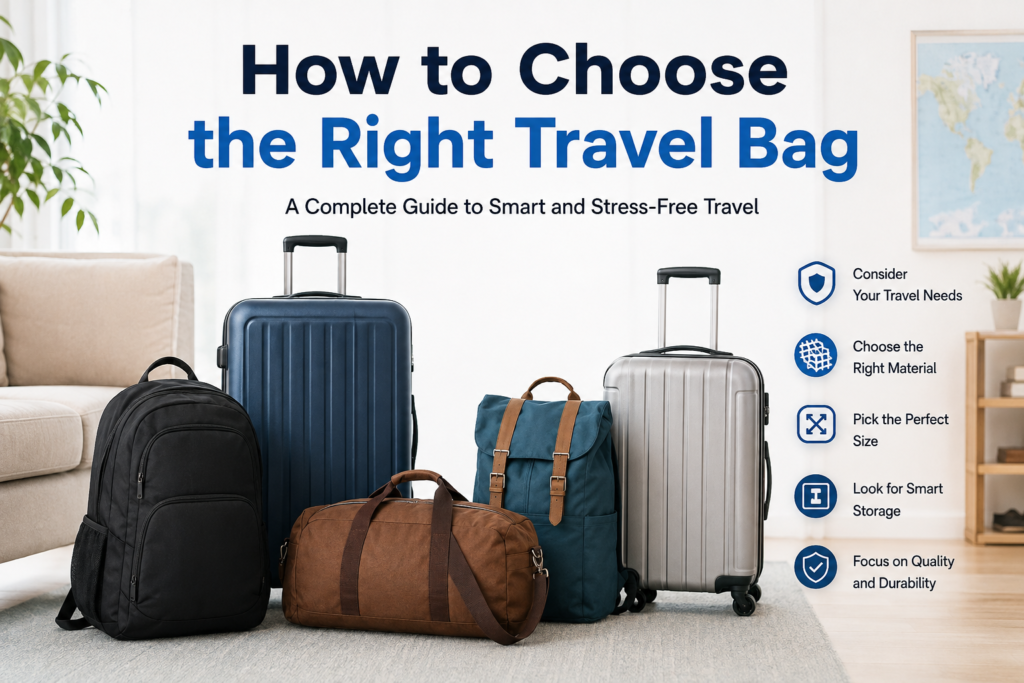
Choosing the right travel bag can make a surprisingly big difference to the whole travel experience. I have found that a good bag is not simply something that holds clothes and personal items. It should make traveling easier, keep belongings organized, and feel comfortable when I am carrying it for a long time. The right travel bag depends on where I am going, how long I will stay, what I plan to carry, and how I will travel.
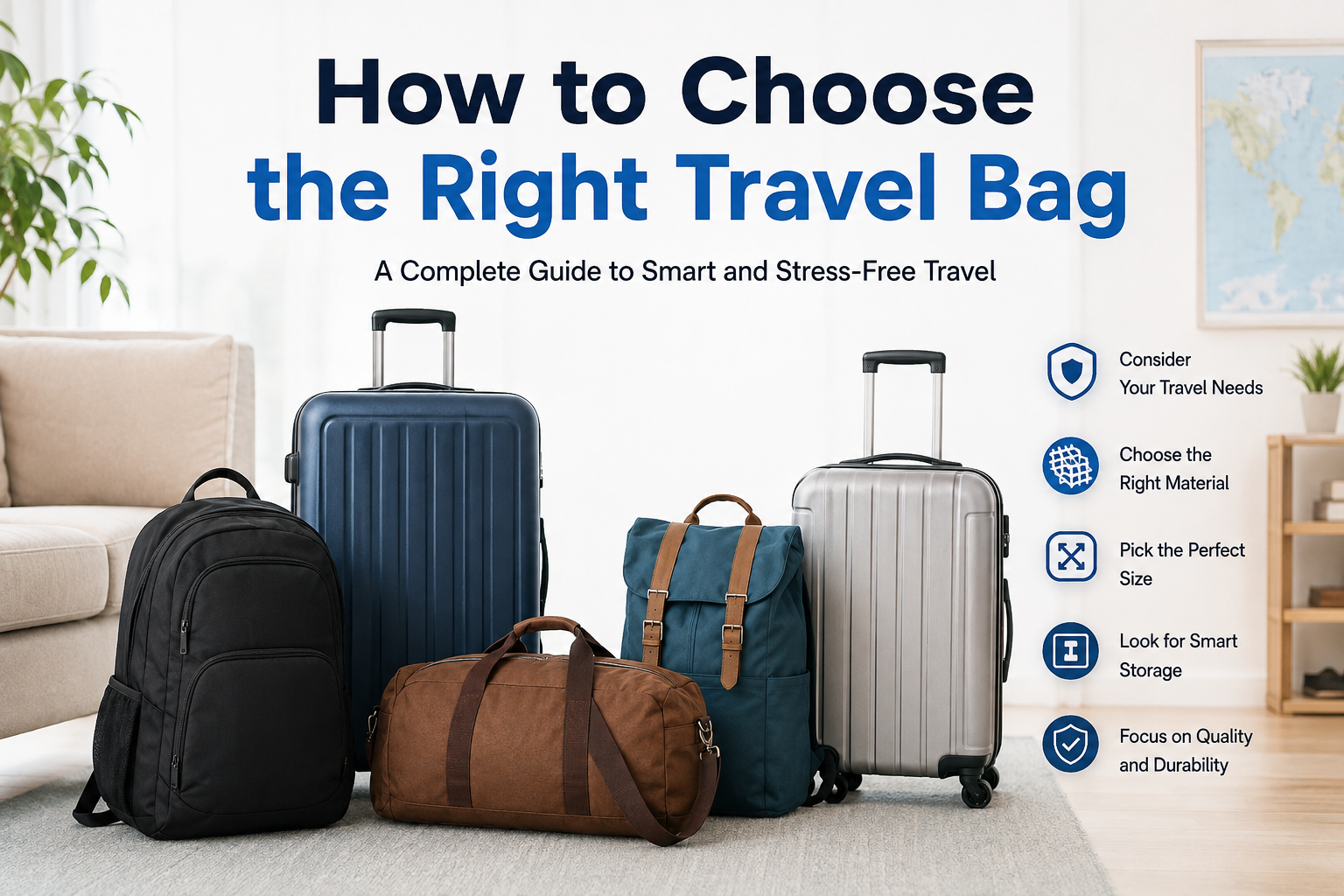
There are many types of travel bags available today, including backpacks, duffel bags, carry on luggage, suitcases, and travel totes. With so many choices, it can be difficult to decide which one is actually suitable. In my opinion, the best approach is to focus on your personal travel needs instead of choosing a bag just because it looks attractive.
Think About Your Type of Travel
The first thing I consider when choosing a travel bag is the type of trip I am planning. A bag that works perfectly for a weekend trip may not be suitable for a long vacation.
If I am going on a short trip, I usually prefer a compact backpack or duffel bag. These options are easy to carry and do not take up much space. For longer vacations, a larger suitcase can be more practical because it provides enough room for clothes, shoes, toiletries, and other essentials.
Your travel method also matters. If you will be using trains, buses, or walking through different locations, a backpack or lightweight bag can be more convenient. If most of your journey involves airports and hotels, rolling luggage may be a better choice.
Choose the Right Travel Bag Size
Size is one of the most important factors when choosing a travel bag. A bag that is too small can become frustrating because you may struggle to fit everything inside. On the other hand, a bag that is too large can encourage you to pack unnecessary items.
I recommend thinking about what you actually need before deciding on the size. For a short weekend trip, a small travel bag may be enough. For a week long vacation, a medium sized suitcase or spacious travel backpack may provide a better balance.
If you are planning to use the bag as carry on luggage, always check the current size and weight requirements of your airline before traveling. Different airlines can have different policies, so checking in advance can prevent problems at the airport.
Consider the Weight of the Bag
One mistake people often make is focusing only on how much a bag can hold. I believe the weight of the empty bag is just as important.
A heavy suitcase can become difficult to move once clothes and other belongings are packed inside. A lightweight travel bag gives you more flexibility because more of the total weight can be used for your actual belongings.
This is particularly important if you expect to walk frequently or move between several destinations. A lighter bag can make those situations much more comfortable.
Decide Between a Backpack and Suitcase
Backpacks and suitcases are two of the most popular travel bag choices, and both have their advantages.
A travel backpack is useful when mobility is important. It leaves your hands free and can be easier to carry through crowded places, public transportation, or uneven streets. Many travel backpacks also have separate compartments for laptops, clothes, documents, and small accessories.
A suitcase is usually better when you want organized packing and easy transportation. Suitcases with wheels can be especially convenient at airports, hotels, and smooth roads.
For my choice, I would look at the journey rather than simply choosing the most popular option. If I expect lots of walking, I would lean toward a backpack. If I want maximum organization and easy movement across airports, I would consider a suitcase.
Look at the Material and Durability
The material of a travel bag affects its durability, weight, appearance, and ability to handle different conditions.
Some bags use strong fabric materials that are flexible and lightweight. Others use hard shells that provide more structure and protection. Both can be good choices depending on how you travel.
I personally think durability should be a priority. A travel bag can experience rough handling, crowded transportation, frequent opening and closing, and exposure to different environments. Strong stitching, reliable zippers, sturdy handles, and quality wheels are features worth checking before making a purchase.
You do not necessarily need the most expensive bag. Instead, look for a bag that offers good construction and suits the amount of travel you expect to do.
Check the Compartments and Organization
A travel bag becomes much more useful when it helps you keep everything organized.
I prefer bags with several practical compartments because they make it easier to find important items. A separate section for shoes, electronics, documents, toiletries, or small accessories can save time during a trip.
However, having too many pockets is not always better. If there are compartments everywhere, it can sometimes become difficult to remember where everything is stored. I recommend choosing a design that provides useful organization without making packing complicated.
For frequent travelers, features such as laptop compartments, internal straps, zipped pockets, and easily accessible sections can be very helpful.
Think About Comfort
Comfort is another important part of choosing the right travel bag. A bag may look excellent in a store, but that does not mean it will feel comfortable after several hours.
For backpacks, I would check the shoulder straps, back support, padding, and overall weight distribution. Adjustable straps are particularly useful because they allow the bag to fit your body more comfortably.
For rolling luggage, pay attention to the handle and wheels. The handle should extend smoothly and feel stable. Wheels should move easily without requiring too much effort.
If possible, try carrying or moving the bag before buying it. A few minutes of testing can tell you a lot about whether the bag feels comfortable.
Consider Security Features
Travel involves carrying personal belongings, so security should also be considered. A good travel bag can include features that make your belongings more difficult to access accidentally or without your knowledge.
Secure zippers, strong closures, and well designed compartments can provide extra peace of mind. Some travel bags also include hidden pockets where travelers can keep important small items.
I would not choose a bag based only on security features, but I do believe they are valuable when combined with good organization and durability.
Check the Wheels and Handles
If you choose a suitcase, spend some time checking the wheels and handles. These parts often receive significant use during travel.
Four wheel suitcases can be convenient because they can move in different directions and are often easy to maneuver in airports. Two wheel designs can also be useful, especially when moving across surfaces where four wheel luggage may not perform as smoothly.
The handle should feel firm and extend without sticking. I also recommend checking whether the wheels feel stable and roll smoothly.
A suitcase with excellent storage but poor wheels can quickly become frustrating.
Think About Weather Protection
Weather is another factor I consider when choosing travel luggage. Depending on your destination, your bag may be exposed to rain, humidity, dust, or other conditions.
A water resistant exterior can help protect belongings from light rain and accidental spills. This does not mean every travel bag needs to be completely waterproof. Instead, consider the conditions you are likely to experience.
If you are traveling somewhere with unpredictable weather, using packing cubes or waterproof pouches inside the bag can provide another layer of protection.
Match the Bag With Your Packing Style
Everyone has a different packing style. Some people pack only the basics, while others like to carry extra clothing and accessories.
If you prefer minimal packing, a smaller travel bag may encourage you to stay organized and avoid unnecessary items. If you usually carry several outfits, shoes, electronics, and other essentials, you may need additional space.
I think the best travel bag should match your normal habits rather than forcing you to completely change the way you pack.
Set a Realistic Budget
Price is naturally an important consideration. Travel bags are available at many different prices, but spending more does not automatically mean you will get the perfect bag.
Before shopping, I recommend setting a realistic budget and identifying the features that matter most to you. For example, if you travel frequently, durability may be more important than appearance. If you travel only occasionally, you may prefer a simple and affordable option.
Think of a travel bag as something you will use repeatedly. A reliable bag that lasts for years can provide better value than a cheap bag that needs to be replaced frequently.
Consider Your Destination
Your destination can also influence your decision. A city vacation may require a different travel bag than an outdoor trip.
For city travel, a compact backpack or rolling suitcase can work well. For outdoor adventures, a durable backpack with comfortable straps and practical storage may be more appropriate.
Climate also matters. Hot weather, cold weather, rain, and dusty environments can all affect what type of bag makes sense.
Before buying, think about the places you normally visit and the activities you usually enjoy during your trips.
Avoid Choosing a Bag Only for Its Appearance
A stylish travel bag can certainly be appealing, but appearance should not be the main reason for your decision.
I believe functionality should come first. A beautiful bag that is uncomfortable, fragile, or difficult to organize may become a problem once the trip begins.
Look at the complete picture. Consider size, weight, comfort, material, compartments, security, wheels, handles, and durability. Once these factors meet your needs, you can choose a design that you personally like.
Final Thoughts
Learning how to choose the right travel bag does not have to be complicated. In my view, the most important thing is understanding your own travel habits before you start shopping.
Think about the length of your trips, the transportation you use, the amount you normally pack, and the destinations you visit. Then compare different travel bags based on size, weight, material, comfort, storage, durability, and price.
The perfect travel bag is not necessarily the largest, most expensive, or most fashionable option. It is the one that makes your journey easier and helps you carry your belongings comfortably and safely.
When I choose travel luggage, I always try to think beyond the first impression. A bag should be practical during the entire journey, from packing at home to arriving back after the trip. Taking a little time to choose carefully can make traveling more comfortable, organized, and enjoyable.