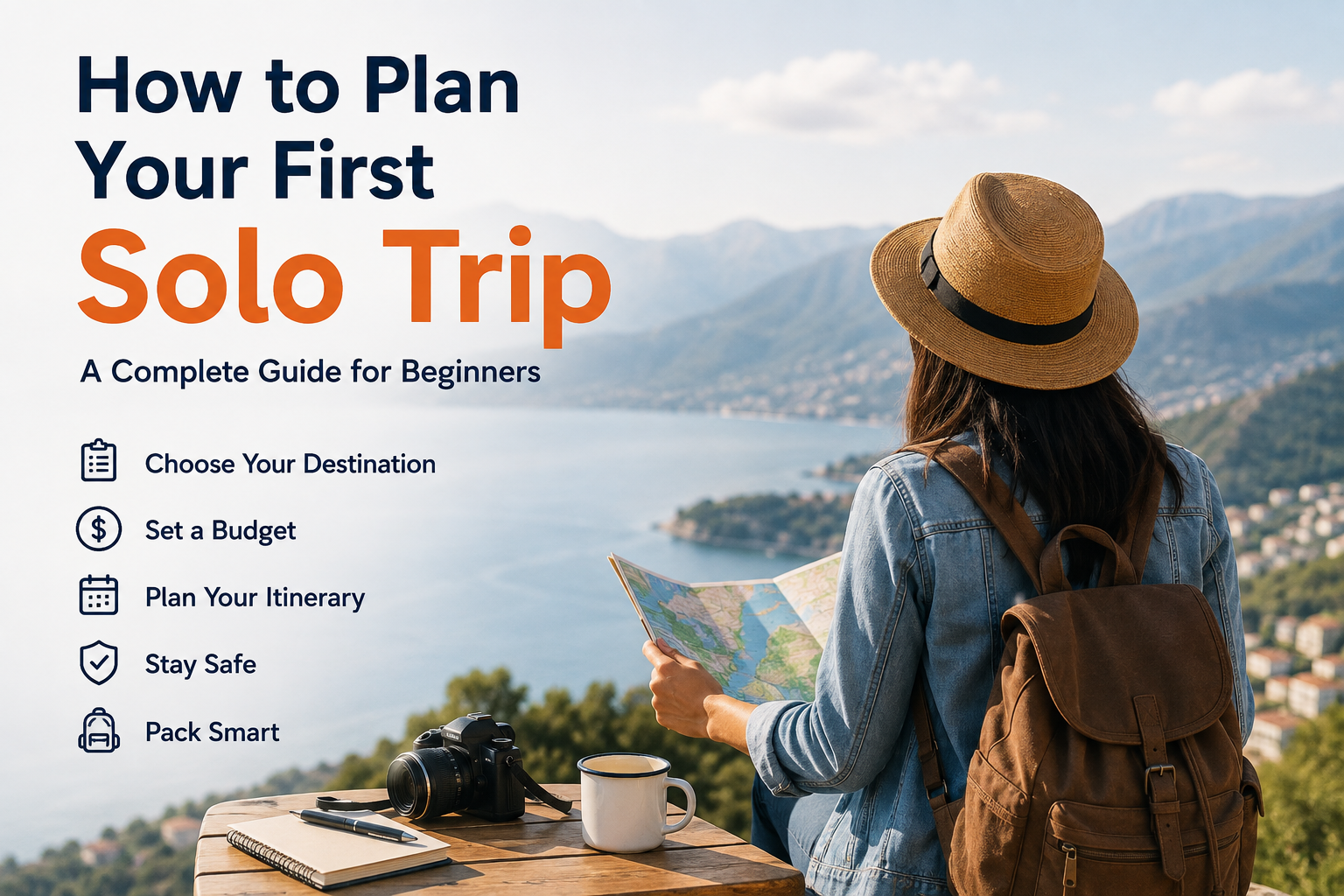
Planning your first solo trip can feel exciting, confusing, and a little scary at the same time. I remember that traveling alone can make you think about many things before you even leave home. You may wonder where to go, how much money you need, where to stay, what to pack, and whether you will feel comfortable by yourself.
In my opinion, solo travel becomes much easier when you take the time to plan the important details before your journey. You do not need to plan every minute of your trip. You simply need a clear idea of where you are going, what you want to do, and how you will stay safe.
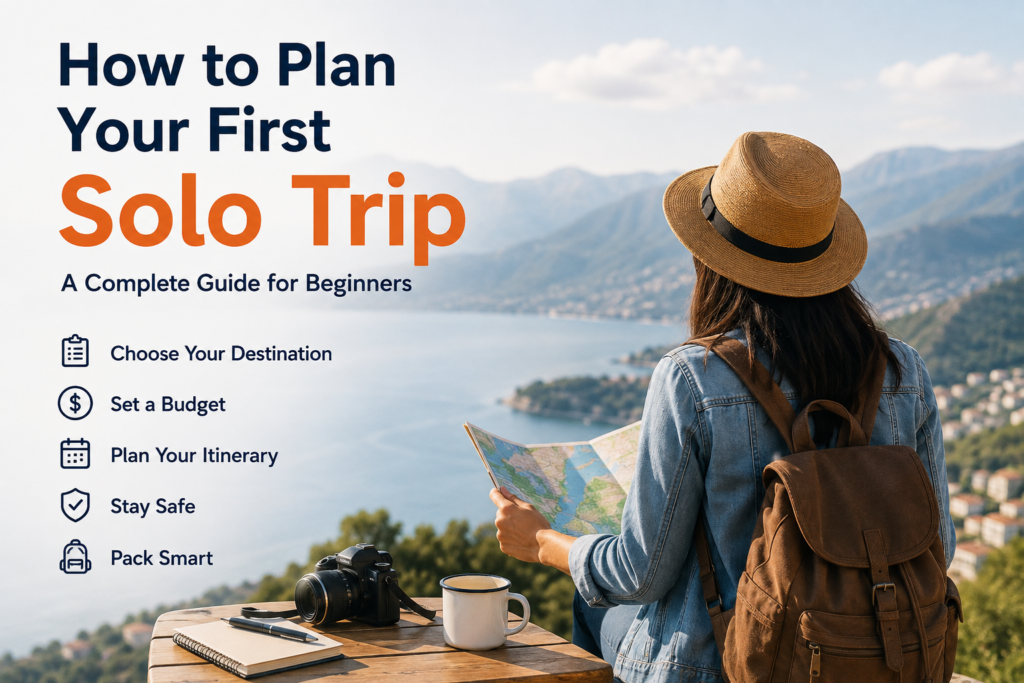
In this guide, I will share my practical tips on how to plan your first solo trip so you can travel with more confidence and enjoy the experience.
Choose the Right Destination
The first step in planning a solo trip is choosing a destination that matches your comfort level. If this is your first time traveling alone, I would recommend starting with a place that is relatively easy to understand and navigate.
Think about the language, transportation, local culture, weather, accommodation options, and general travel conditions. A destination with reliable public transportation and plenty of accommodation choices can make your first solo travel experience much easier.
You should also consider what type of experience you want. Maybe you enjoy beaches, mountains, historical places, food, shopping, photography, or quiet natural areas. Choosing a destination that genuinely interests you will make the trip more enjoyable.
I also believe that you should not choose a destination simply because it is popular on social media. Pick somewhere that fits your personality, budget, and travel experience.
Set a Realistic Travel Budget
Budget planning is one of the most important parts of planning your first solo trip. When you travel alone, you are responsible for all your expenses, so knowing your budget before leaving home can prevent unnecessary stress.
Start by estimating the main costs. These may include transportation, accommodation, food, activities, local transportation, travel insurance, entrance fees, and emergency expenses.
I prefer to create a simple daily budget instead of thinking only about the total cost. For example, decide how much you can comfortably spend on accommodation, meals, transportation, and activities each day.
Always keep some extra money for unexpected situations. Your flight or bus could be delayed, you might need to take a taxi, or you may decide to visit an attraction that was not part of your original plan.
The goal is not to spend as little as possible. The goal is to create a budget that allows you to enjoy your trip without constantly worrying about money.
Book Your Accommodation Carefully
Finding the right place to stay is especially important when traveling alone. I recommend choosing accommodation in a convenient area rather than focusing only on finding the cheapest option.
Before booking, check the location, reviews, transportation options, check in times, and available facilities. Read recent reviews from other travelers and pay attention to comments about cleanliness, security, staff, and the surrounding area.
For a first solo trip, staying somewhere close to public transportation or major attractions can make things much easier. You will spend less time trying to figure out transportation and more time enjoying your destination.
I also suggest sharing your accommodation details with someone you trust before you leave. Give them the name of the place, address, booking information, and expected arrival time.
Plan Your Transportation
Transportation can be one of the most stressful parts of solo travel if you have never visited a destination before. That is why I like to research transportation before the trip.
Find out how you will get from the airport, train station, or bus station to your accommodation. Check whether the destination has buses, trains, taxis, ride services, or other transportation options.
If you arrive late at night, make a plan before leaving home. Knowing exactly how you will reach your accommodation can give you peace of mind.
You do not need to understand the entire transportation system before arriving. Just learn enough to handle your arrival and your first day comfortably.
Create a Flexible Itinerary
One mistake I think beginners often make is planning every minute of a solo trip. While having a plan is useful, I believe flexibility is equally important.
Make a list of the places you really want to visit and organize them according to location. Try to avoid traveling across the entire city several times in one day.
Leave some free time in your itinerary. You might discover a beautiful street, a local restaurant, a small museum, or a peaceful park that was not included in your original plan.
Solo travel gives you the freedom to change your plans whenever you want. If you are tired, you can rest. If you love a particular place, you can stay longer. That freedom is one of the best things about traveling alone.
Research Local Customs
Before traveling to a new destination, spend some time learning about local customs and basic cultural rules. This can help you avoid uncomfortable situations and show respect to local people.
Research appropriate clothing, tipping customs, greetings, photography rules, public behavior, and important cultural practices.
I also recommend learning a few basic words in the local language. Even simple phrases such as hello, thank you, please, and excuse me can make communication easier.
You do not need to become fluent. A little preparation can make you feel more confident when interacting with people.
Prepare Your Important Documents
Before your solo trip, make sure all your important documents are ready. Depending on your destination, these may include your passport, visa, identification documents, travel insurance information, transportation tickets, accommodation details, and emergency contacts.
I recommend keeping both physical and digital copies of important documents. Store digital copies somewhere secure so you can access them if you lose the originals.
Check your passport validity and visa requirements well before your departure. Do not wait until the last few days to discover that you need additional documents.
Having your paperwork organized can remove a lot of unnecessary stress from your trip.
Pack Light and Smart
Packing for a solo trip does not need to be complicated. In my experience, many beginners pack more than they actually need.
Choose clothing that is comfortable and suitable for the weather. Pack versatile items that can be used for different activities. Take comfortable shoes, basic toiletries, necessary electronics, chargers, and any personal essentials you regularly use.
Try to keep your luggage manageable. When traveling alone, you have to carry everything yourself. A lighter bag makes airports, buses, trains, and city streets much easier to handle.
Before leaving home, check the weather forecast and adjust your packing accordingly.
Think About Travel Safety
Safety should always be part of your solo travel planning. This does not mean you should be afraid of traveling alone. It simply means you should stay aware of your surroundings and make sensible decisions.
Keep your important belongings secure and avoid displaying large amounts of cash or expensive items. Be careful when sharing personal information with strangers.
When exploring a new place, especially at night, stay in areas where you feel comfortable. Keep your phone charged and make sure you know how to contact local emergency services if necessary.
I also recommend sharing your itinerary with a family member or trusted friend. Let them know where you are staying and when you expect to check in.
Simple precautions can make solo travel much more comfortable.
Keep Your Phone Ready
Your phone can be extremely useful during a solo trip. Before leaving, download important maps and travel information that you may need.
Save your accommodation address, transportation details, booking information, and important contacts. If you are traveling internationally, check your mobile data options before departure.
A portable power bank can also be useful because you may spend many hours away from your accommodation.
I would not recommend relying completely on your phone, though. Keep important addresses and information available offline in case your battery dies or your internet connection stops working.
Give Yourself Time to Adjust
Your first solo trip may not feel perfect from the beginning. You might feel nervous when you arrive. You may even feel lonely for a short time, especially if you are used to traveling with family or friends.
That is completely normal.
Give yourself time to adjust. Start with familiar activities and gradually become more comfortable exploring on your own.
One of the biggest benefits of solo travel is that it can improve your confidence. You learn how to make decisions, solve small problems, communicate with different people, and manage your own time.
Every successful experience can make your next journey easier.
Enjoy Your Freedom
The best part of traveling alone is having complete control over your time. You do not have to compromise with another person’s schedule or interests.
If you want to wake up early and watch the sunrise, you can do it. If you want to spend an afternoon in a cafe, you can. If you want to change your itinerary completely, you have that freedom too.
I think this is what makes solo travel so special. You get the opportunity to understand yourself better while discovering new places.
Do not put too much pressure on yourself to make your first solo trip perfect. Some things may not go according to plan, and that is part of traveling.
Final Thoughts
Planning your first solo trip does not have to be difficult. Start by choosing a destination that suits your experience, create a realistic travel budget, book safe and convenient accommodation, research transportation, and prepare your important documents.
Most importantly, give yourself permission to enjoy the journey. You do not need to know everything before you leave. Some confidence comes from preparation, while the rest comes from experience.
In my opinion, the best way to approach solo travel is with a balance of preparation and flexibility. Plan the important things, stay aware of your surroundings, keep your budget under control, and leave enough space for unexpected experiences.
Your first solo trip can become more than just a vacation. It can be an opportunity to become more independent, discover new places, meet interesting people, and learn what you are capable of doing on your own.
If you have been thinking about traveling alone, start planning today. Choose a destination, make a simple budget, research the basics, and take that first step. With the right preparation, your first solo travel experience can become one of the most memorable journeys of your life.