Traveling for the first time can feel exciting, but packing your bags can also become confusing. I still believe that good packing is one of the easiest ways to make a trip more comfortable. When everything is organized before leaving home, you spend less time worrying about missing items and more time enjoying your journey.
A travel packing checklist for beginners can make the entire process much easier. Instead of throwing random things into a suitcase at the last minute, you can prepare everything step by step. In my experience, the best packing method is not about taking everything you own. It is about taking the things you actually need.
In this guide, I will share a practical travel packing checklist that beginners can use for short trips, vacations, family visits, or general travel.
Start With Your Travel Plans
Before packing anything, I recommend checking your travel plans. Think about where you are going, how many days you will stay, what the weather will be like, and what activities you expect to do.
For example, a beach vacation requires different clothing from a winter trip. Similarly, a business trip may require formal clothes, while a casual vacation may only need comfortable outfits.
Your destination should always influence your packing decisions. Check the expected weather and think about whether you will spend most of your time indoors, outdoors, walking, sightseeing, or relaxing.
I also recommend checking the baggage rules of your airline if you are traveling by plane. Different airlines can have different limits for checked luggage and carry on bags.
Travel Documents
Documents should be at the top of your packing checklist because losing an important document can create unnecessary problems.
For international travel, keep your passport in a safe and easily accessible place. Depending on your trip, you may also need a visa, travel insurance information, hotel booking details, flight tickets, identification documents, or other required paperwork.
I personally prefer keeping digital copies of important documents on my phone while also carrying physical copies when appropriate. Having backup copies can be useful if something unexpected happens.
Your basic travel documents checklist may include:
Passport
Visa if required
Identification card
Flight or transport tickets
Hotel reservation details
Travel insurance information
Emergency contact information
Important booking confirmations
Keep these documents somewhere secure rather than placing them deep inside your main suitcase.
Clothing Packing Checklist
Clothing usually takes up most of the space in a suitcase, so beginners often pack more clothes than they actually need. I think a better approach is to plan your outfits before putting them into the bag.
For a normal trip, consider packing comfortable shirts, trousers, jeans, underwear, socks, sleepwear, and suitable footwear. If you are traveling somewhere cold, add warm layers, a jacket, and other weather appropriate clothing.
For warmer destinations, lightweight clothing can be more practical.
A simple clothing checklist can include:
T shirts or tops
Trousers or jeans
Underwear
Socks
Sleepwear
Light jacket or sweater
Comfortable walking clothes
One suitable outfit for special occasions
Weather appropriate clothing
Comfortable shoes
The exact amount depends on the length of your trip. For a short trip, you usually do not need a huge collection of clothes.
Toiletries and Personal Care Items
Toiletries are another important part of a travel packing checklist for beginners. These are small items, but forgetting them can be inconvenient.
Basic toiletries can include a toothbrush, toothpaste, soap, shampoo, comb, deodorant, and other personal care products you normally use.
If you are flying, remember that liquids in carry on luggage may be subject to airport rules. It is always sensible to check the current requirements before packing.
My advice is to avoid carrying large bottles when smaller travel size containers are enough. This saves space and keeps your luggage more organized.
Your toiletries checklist may include:
Toothbrush
Toothpaste
Shampoo
Soap
Comb or brush
Deodorant
Face wash
Moisturizer
Personal hygiene products
Small towel if needed
Electronics and Gadgets
Modern travel often involves several electronic devices. However, carrying too many gadgets can make your luggage heavy.
For most trips, a smartphone and charger are essential. Depending on your needs, you might also take headphones, a power bank, a camera, a laptop, or a tablet.
Before leaving, I recommend charging your devices and checking that your chargers are working properly.
A useful electronics checklist includes:
Smartphone
Phone charger
Power bank
Headphones
Camera and charger if needed
Laptop or tablet if necessary
Travel adapter if required
Try to keep important electronics in your carry on bag instead of placing them in checked luggage when appropriate.
Medicines and Health Essentials
Health items should also have a place on your packing list. If you regularly use prescribed medicine, make sure you have enough for the duration of your trip and follow the applicable travel requirements.
You may also want to carry basic personal health items that you normally use. Do not pack unfamiliar medicines simply because you think you might need them.
I recommend keeping important health items somewhere accessible rather than buried under clothes.
Depending on your personal needs, your checklist could include:
Regular prescribed medicines
Basic first aid supplies
Personal health products
Hand sanitizer
Sunscreen
Insect repellent when appropriate
Any other essential personal items
For international travel, check the destination’s rules regarding medicines before departure.
Money and Payment Essentials
Money is another area that beginners should plan carefully. Depending on your destination, you may need cash, a bank card, or another accepted payment method.
I prefer having more than one payment option available when traveling. For example, you might carry some appropriate local currency while also having a card available.
Avoid keeping all your money and payment methods in one place. Keeping important items organized can make travel less stressful.
Your payment checklist can include:
Cash
Debit or credit card if available
Travel card if needed
Wallet
Emergency payment option
Before leaving, it can also be useful to understand how you will access money at your destination.
Shoes and Accessories
Shoes can take more space than many beginners expect. Instead of taking several pairs, think about what you will actually use.
A comfortable pair of walking shoes is often useful for sightseeing. Depending on the destination, you might also need sandals, formal shoes, or weather appropriate footwear.
Accessories can include sunglasses, a hat, a small backpack, a reusable water bottle where appropriate, and other useful personal items.
The goal should be to choose practical items rather than filling your suitcase with things you may never use.
Travel Bag and Organization
Choosing the right luggage can make packing much easier. Your suitcase should be suitable for the length and type of your trip.
Packing cubes or small organizers can help separate clothing, toiletries, electronics, and other items. You do not necessarily need expensive accessories. Even simple bags can help keep things organized.
I also recommend keeping frequently needed items near the top of your luggage. This saves you from unpacking the entire suitcase whenever you need something.
What Beginners Should Avoid Packing
One of the biggest beginner packing mistakes is taking too much. When I pack for a trip, I try to question every item before putting it into my bag.
Ask yourself whether you will realistically use it. If the answer is probably not, it may be better to leave it at home.
Avoid packing excessive clothing, duplicate gadgets, unnecessary accessories, and large containers of products that you can easily obtain at your destination when appropriate.
Overpacking can make transportation difficult and may also create additional baggage costs when flying.
Final Packing Checklist
Before leaving home, I recommend doing one final check.
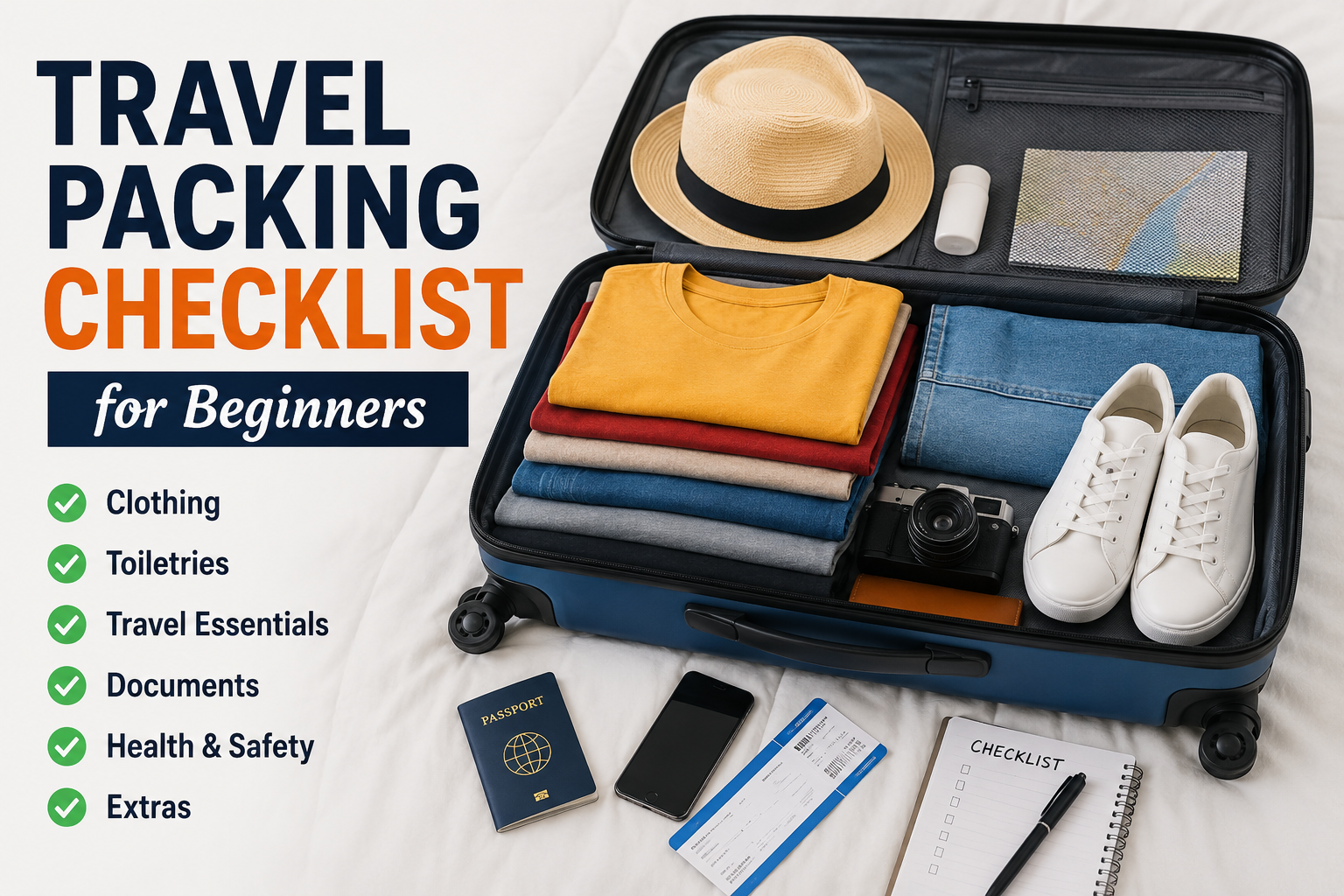
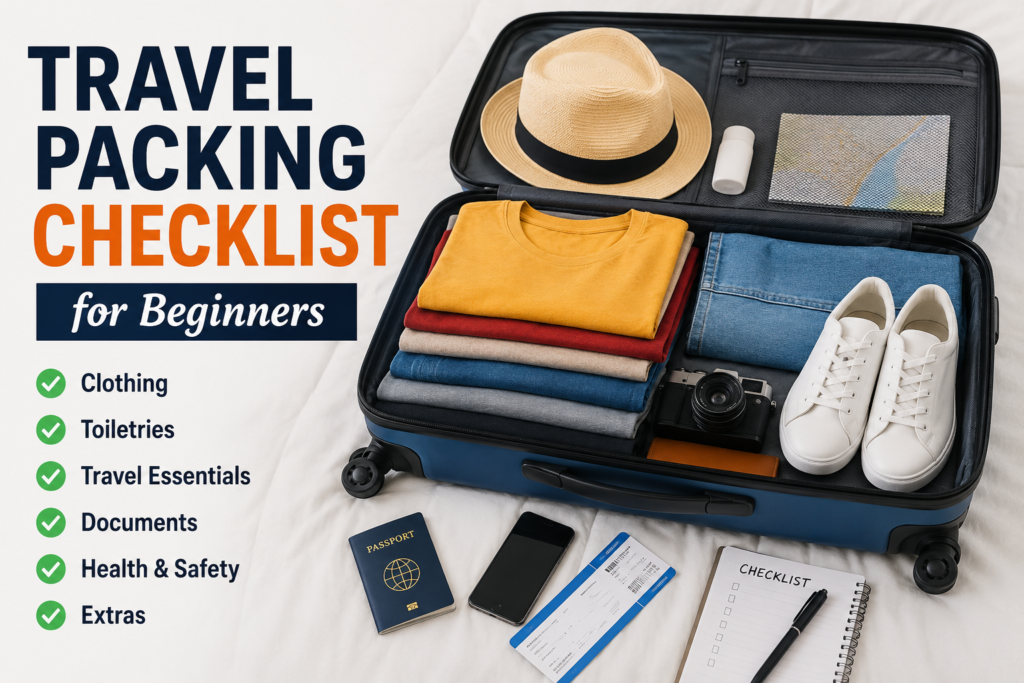
Your complete travel packing checklist for beginners can include:
- Passport and identification
- Visa if required
- Tickets and booking details
- Money and payment cards
- Phone and charger
- Power bank
- Required medicines
- Toiletries
- Underwear and socks
- Main clothing
- Weather appropriate clothing
- Comfortable shoes
- Important electronics
- Travel insurance information
- Emergency contact details
- Personal essentials
After completing the checklist, check your home once more. Look at your bedroom, bathroom, charging area, and any place where you prepared your belongings. Small items such as chargers and personal documents are surprisingly easy to forget.
Pack Smart and Keep It Simple
Packing for a trip does not have to be stressful. In my opinion, the simplest approach is to plan early, check your destination, prepare a basic checklist, and only pack what you genuinely need.
A good travel packing checklist for beginners helps you stay organized and prevents last minute mistakes. Start with important documents, then prepare clothing, toiletries, electronics, health essentials, money, and other personal items.
Remember that every trip is different. A weekend trip will not require the same things as a two week vacation. Your destination, weather, transportation, activities, and personal needs should always guide your decisions.
The most important lesson I have learned about packing is that less can often be more. When your luggage is organized and manageable, traveling becomes easier. Instead of worrying about what you forgot or struggling with an overloaded suitcase, you can focus on the experience itself.
So before your next journey, take a little time to prepare your own travel packing checklist. Check each item before leaving, keep important documents accessible, and avoid packing things simply because you might need them. With a little planning, even a first time traveler can pack confidently and enjoy a smoother trip.