A long journey can be exciting, but it can also become stressful if I leave everything until the last minute. Whether I am traveling by plane, train, bus, car, or another form of transport, I have found that good preparation makes the entire experience easier. When I know where I am going, what I need, and how I will manage my time, I can enjoy the journey instead of worrying about small problems.
In this guide, I will share my practical tips on how to prepare for a long journey. These simple travel preparation ideas can help make a trip more comfortable, organized, safe, and enjoyable.
Start Planning Your Journey Early
For me, the best way to prepare for a long journey is to start early. Last minute preparation often creates unnecessary stress because there are many small things to remember.
I first check my travel date, departure time, destination, route, and expected journey duration. If I am traveling by air, I check my flight details and airport information. If I am traveling by road or train, I check the departure point, estimated travel time, and possible stops.
Planning early also gives me enough time to solve unexpected problems. If I discover that an important document is missing or something needs to be purchased, I still have time to handle it.
Make a Simple Travel Checklist
A travel checklist is one of the most useful things I can prepare before a long trip. Instead of trying to remember everything, I write down the important items.
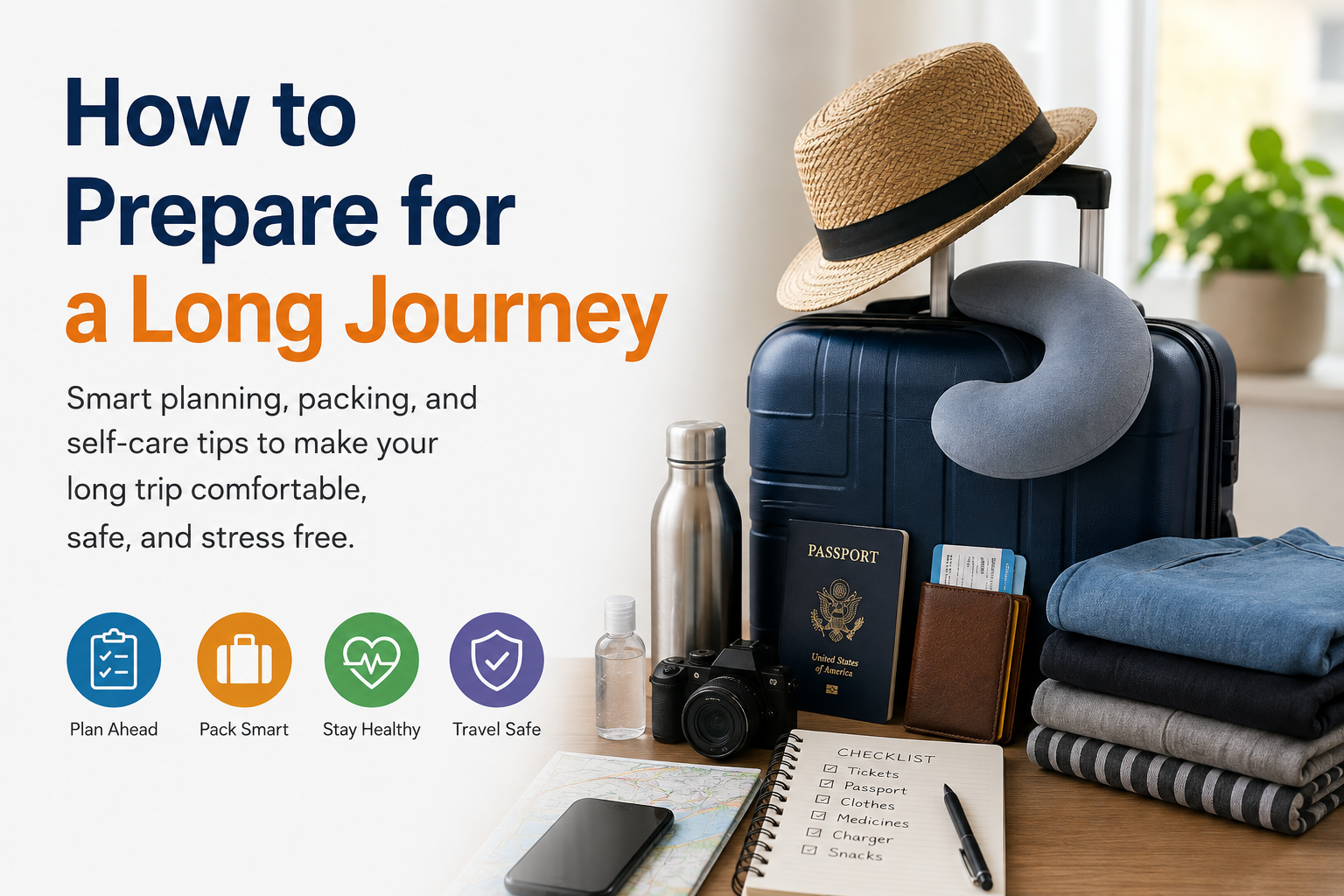
My checklist usually includes travel documents, money, clothing, personal care items, electronic devices, chargers, medicines if needed, snacks, and entertainment.
I also separate important items from things that I can easily replace. My passport, identification, tickets, money, phone, and essential documents always receive extra attention.
A simple checklist helps me avoid the common mistake of remembering something only after I have already left home.
Check Your Travel Documents
Travel documents should always be checked before leaving. Depending on the destination, I may need a passport, identification card, visa, tickets, hotel information, insurance documents, or other important papers.
I make sure the names and dates on my documents are correct. For international travel, I also check whether my passport meets the destination requirements.
I prefer keeping important documents in a secure and easily accessible place. I also keep digital copies of important documents on a secure device or account. This gives me another option if I lose a physical document during the journey.
Pack According to the Journey
Packing for a long journey does not mean taking everything I own. I try to pack according to the weather, destination, length of the trip, and activities I expect to do.
For clothing, I choose comfortable items that can be combined easily. I avoid packing too many unnecessary clothes because heavy luggage can make travel tiring.
I also keep essential items near the top of my bag so I do not have to unpack everything when I need something.
Comfortable shoes are especially important. During a long journey, I may spend several hours sitting, walking through stations, waiting at airports, or moving between different locations. Comfortable footwear can make a noticeable difference.
Prepare a Small Travel Bag
For a long journey, I like having a small personal bag with the things I may need during travel. This keeps important items within easy reach.
Depending on the type of journey, my personal travel bag may contain my phone, charger, headphones, wallet, documents, tissues, hand sanitizer, water bottle, snacks, and a small notebook.
I also keep something warm or light clothing available when appropriate because temperatures inside buses, trains, airplanes, or terminals can vary.
The idea is simple. I want everything I may need during the journey to be accessible without opening my main luggage.
Plan Your Food and Water
Food is another important part of long journey preparation. I do not always depend completely on food being available during the trip because delays or limited options can happen.
I prefer carrying simple snacks that are easy to store and eat. Depending on the journey, options can include nuts, crackers, fruit, sandwiches, or other convenient foods.
Staying hydrated is also important. I carry water when it is permitted and refill it when suitable. I try not to drink excessive amounts at once because frequent stops can become inconvenient during certain types of travel.
Good food and hydration can help me feel more comfortable and energetic throughout a long journey.
Prepare Your Phone and Electronic Devices
Before leaving home, I check my phone and other electronic devices. I make sure they are charged and that I have the necessary charging cables.
If I am traveling somewhere unfamiliar, I download maps or other information that I may need without an internet connection. I also save important addresses, booking information, and contact details.
A power bank can be useful for long trips, especially when access to electrical outlets may be limited. I also keep my charging cable in my personal bag rather than inside checked or stored luggage.
These small preparations can prevent a lot of frustration later.
Think About Your Comfort
Long journeys can be physically tiring because sitting in one position for several hours can make me uncomfortable. That is why I pay attention to comfort before I leave.
A travel pillow can help during long periods of sitting. Comfortable clothing can also make a big difference. I avoid wearing clothing that feels too tight or restrictive.
When possible, I move around during breaks and gently stretch my legs. If I am traveling by car, I plan suitable stops. If I am on a plane or train, I use appropriate opportunities to stand and move safely.
My goal is not to make the journey perfect. I simply try to make it as comfortable as possible.
Take Care of Your Sleep
Sleep can be difficult during a long journey, especially when traveling overnight or crossing different time zones.
Before leaving, I try to get enough rest instead of staying awake late to finish unnecessary tasks. If I know I will have a long travel day, starting well rested can make the experience much easier.
For longer trips, I may bring headphones, an eye mask, or a travel pillow to create a more comfortable environment for resting.
If I am traveling across time zones, I also think about the local time at my destination and gradually adjust my sleeping schedule when practical.
Keep Important Items Secure
Safety should always be part of travel preparation. I keep my important documents, money, phone, and other valuable items secure and close to me.
I avoid placing everything valuable in one location. Having some backup payment options can also be useful when traveling.
I remain aware of my surroundings, particularly in crowded airports, stations, markets, and public transportation areas. I also avoid showing unnecessary valuables in busy places.
Being careful does not mean being nervous. It simply means paying attention.
Prepare Your Home Before Leaving
Preparing for a long journey also means preparing the home before departure. I make sure unnecessary electrical devices are switched off, doors and windows are secured, and important household tasks are completed.
I check that I have not forgotten anything important such as keys, documents, medication, chargers, or travel tickets.
If someone needs to look after my home, plants, pets, or other responsibilities while I am away, I arrange everything before the travel day.
This gives me peace of mind because I know things at home are organized while I am away.
Check the Weather Before Traveling
Weather can affect almost every part of a journey. Before leaving, I check the expected weather at both my starting point and destination.
If rain is expected, I prepare suitable clothing or an umbrella. If the destination is cold, I make sure I have appropriate layers. For hot weather, I consider breathable clothing, sun protection, and enough water.
Checking the weather also helps me decide what to pack. This simple step can prevent me from carrying unsuitable clothing or being unprepared when I arrive.
Keep Some Extra Time
One of my strongest travel habits is leaving extra time. I do not like planning a journey so tightly that one small delay ruins the entire schedule.
Traffic, security checks, queues, weather, transportation delays, and other unexpected situations can happen. Arriving early gives me more time to handle these situations calmly.
If I need to reach an airport, station, or bus terminal, I calculate travel time and add some extra time for possible delays.
Having a time buffer makes the beginning of a long journey much less stressful.
Prepare for Unexpected Problems
Even the best travel plan cannot control everything. Flights can be delayed, roads can become busy, luggage can be misplaced, or plans can change.
Instead of worrying about every possible problem, I prepare a few simple backup options. I keep important contact information available, carry essential items in my personal bag, and know how I can access my travel information if plans change.
A flexible mindset is just as important as physical preparation. When something unexpected happens, staying calm helps me make better decisions.
Final Thoughts
Learning how to prepare for a long journey is mostly about planning simple things before they become problems. I find that early planning, smart packing, comfortable clothing, secure documents, proper hydration, charged devices, and enough rest can make a major difference.
I do not try to prepare for every possible situation. Instead, I focus on the things that are most likely to affect my comfort, safety, and schedule.
A long journey does not have to be exhausting from the beginning. With the right travel preparation, I can leave home feeling organized and confident. The better I prepare before departure, the more attention I can give to the experience itself. For me, that is the real purpose of preparing for a long journey: reducing unnecessary stress so I can enjoy the road ahead.