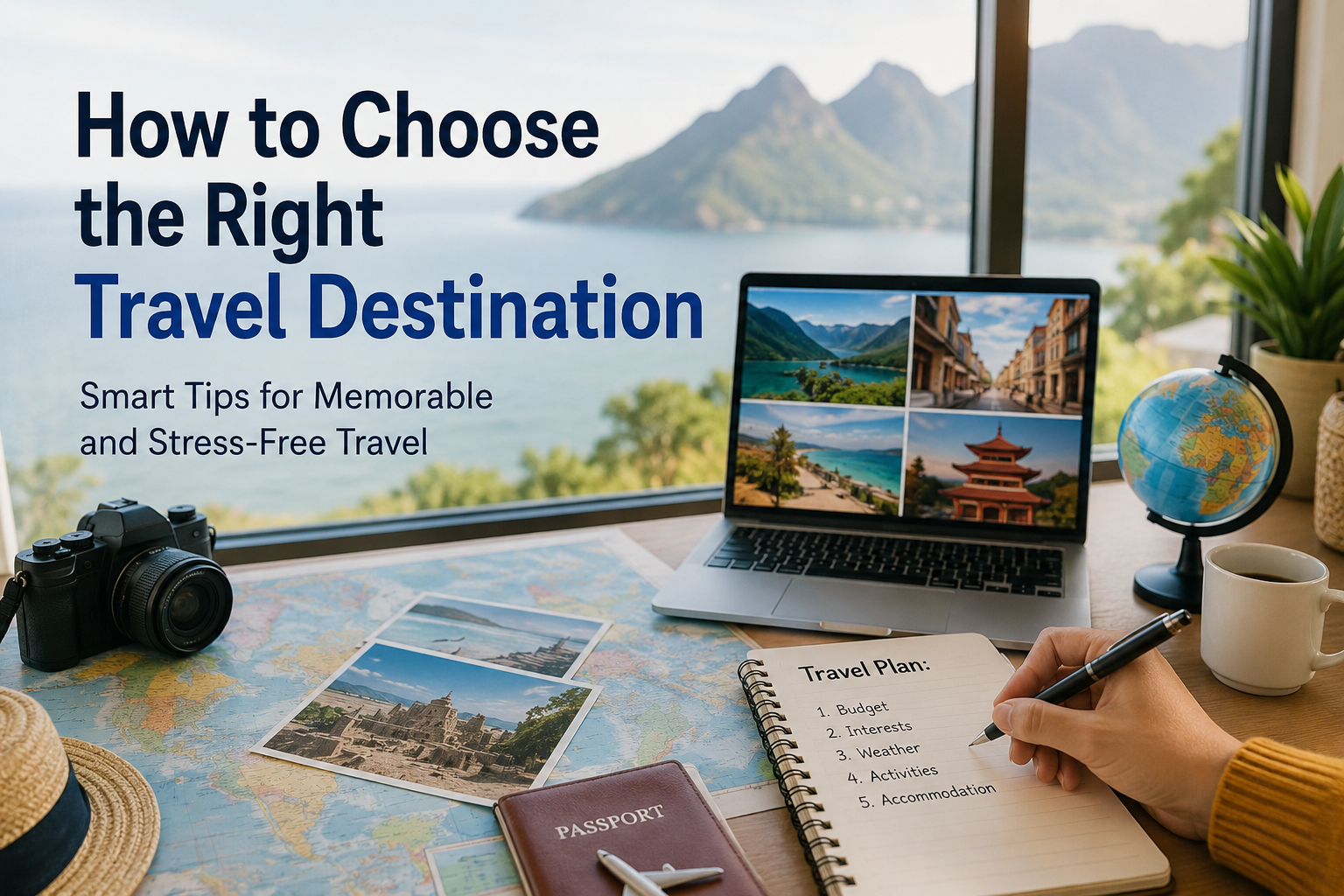
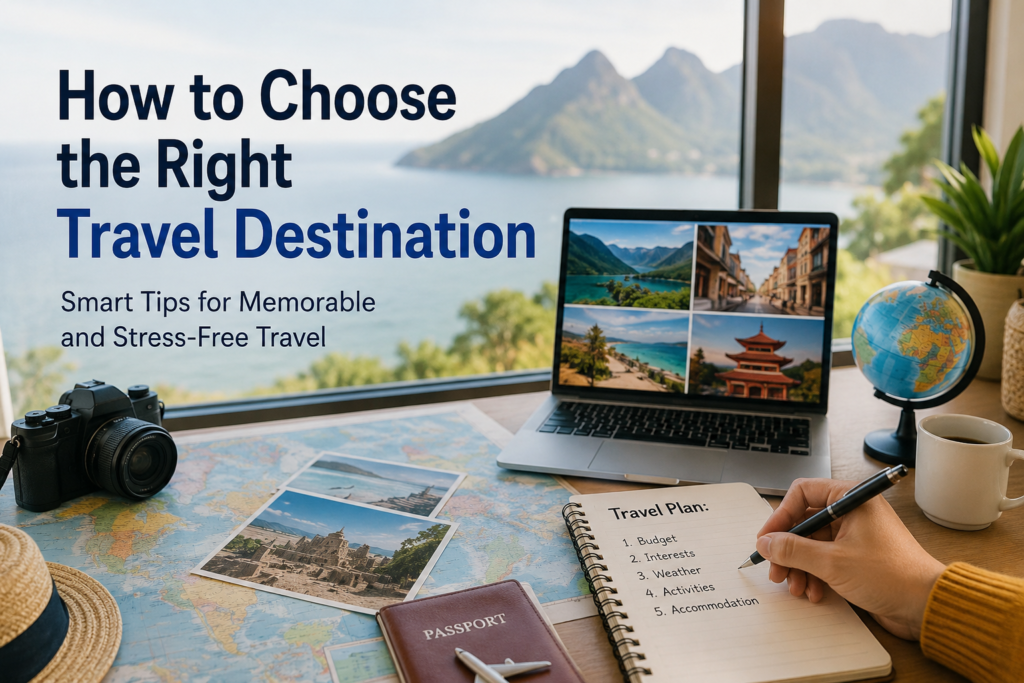
Choosing the right travel destination can make a huge difference in how much you enjoy your trip. In my opinion, a good destination is not always the most famous place or the one that looks amazing on social media. The right travel destination is a place that matches your interests, budget, travel style, available time, and expectations.
I have learned that choosing a destination becomes much easier when you first understand what you actually want from your trip. Some people want peaceful beaches, while others prefer mountains, historical places, busy cities, food experiences, or outdoor adventures. Once you know what you want, you can narrow down your choices and plan a trip that feels enjoyable instead of stressful.
In this article, I will share some simple tips on how to choose the right travel destination and make better travel decisions.
Start With Your Travel Purpose
The first thing I consider when choosing a travel destination is the purpose of the trip. Every trip can have a different reason behind it.
If I want to relax, I usually look for peaceful places with beautiful scenery, comfortable accommodation, and fewer crowds. If I want adventure, I look for destinations that offer activities such as hiking, camping, water sports, or exploring nature.
For a cultural trip, historical cities, museums, traditional markets, and local communities can be more interesting. If the purpose is spending time with family, I would focus on destinations with family friendly activities and convenient transportation.
Knowing your travel purpose can quickly remove destinations that do not match your expectations.
Consider Your Travel Budget
Your budget is one of the most important factors when choosing a travel destination. A destination may look perfect, but it may not be the right choice if the total cost is outside your budget.
I recommend thinking about the complete travel cost instead of looking only at flight prices. Consider transportation, accommodation, food, activities, travel insurance, entrance fees, shopping, and emergency expenses.
Some destinations may have expensive flights but affordable accommodation and food. Others may have cheap flights but higher daily expenses. Comparing the complete cost can help you make a smarter decision.
I also believe it is better to choose a destination that fits comfortably within your budget instead of spending too much money simply to visit a popular place.
Think About the Weather
Weather can completely change your travel experience. Before choosing a destination, always check what the weather is normally like during your planned travel dates.
If I want to spend time at a beach, I would prefer a period with pleasant weather and less chance of heavy rain. For a mountain trip, I would check temperatures, snowfall, road conditions, and seasonal closures.
You should also think about what type of weather you personally enjoy. Some travelers love cold destinations, while others feel happier in warm and sunny places.
Seasonal weather information can also help you avoid extreme temperatures and unexpected travel problems.
Decide What Activities You Enjoy
A destination should offer activities that you genuinely enjoy. Beautiful photographs are not enough to make a trip enjoyable.
Before choosing a place, make a short list of activities you would like to experience. You might enjoy hiking, photography, sightseeing, shopping, local food, museums, beaches, wildlife, sports, or simply relaxing.
For example, if you enjoy history, a modern city with very few historical attractions may not satisfy you. If you love nature, a crowded business district may not be your ideal holiday destination.
I find that choosing activities first and destinations second can sometimes make travel planning much easier.
Think About How Much Time You Have
Your available travel time should influence your destination choice. If you only have a few days, choosing a destination that requires long flights and complicated transportation may leave you exhausted.
For a short trip, I prefer destinations that are easy to reach and have several attractions close together. This allows me to spend more time exploring instead of sitting in airports or traveling between locations.
If you have several weeks, you can consider farther destinations or even combine multiple cities and regions.
A good rule is to choose a destination that allows you to enjoy your available time rather than trying to see too much in a short period.
Check Travel Requirements
Before making a final decision, check the travel requirements for your chosen destination. Depending on where you are traveling, you may need a passport, visa, travel insurance, vaccination documentation, or other paperwork.
I recommend checking official government and airline information before booking anything that cannot easily be refunded.
Also check passport validity requirements and entry rules. Travel requirements can change, so it is better to verify current information close to your departure date.
Taking care of these details early can prevent unnecessary stress later.
Consider Your Travel Style
Everyone has a different travel style. Some people enjoy luxury hotels and organized tours, while others prefer budget accommodation and independent exploration.
Think about what makes you comfortable.
If you enjoy peaceful mornings and quiet surroundings, a busy party destination may not be the best option. If you love nightlife and social activities, a remote countryside location might feel too quiet.
I believe the best travel destination is one that fits your personality. You should not choose a destination simply because other people consider it fashionable.
Research Accommodation Options
Accommodation can have a major impact on the total travel experience. Before choosing a destination, I like to check whether there are enough hotels, guesthouses, hostels, or vacation rentals within my budget.
Location is just as important as price. A cheap hotel far away from everything may cost more when transportation expenses are added.
Read recent reviews and look at the location carefully. Check whether important attractions, restaurants, public transportation, and shops are easily accessible.
Good accommodation does not always mean an expensive hotel. It means finding a comfortable and suitable place for your needs.
Check Transportation
Transportation is another important part of choosing a travel destination. A place may look wonderful, but if getting around is difficult, the trip may become frustrating.
Research how you will travel from the airport or station to your accommodation and how you will move around during your stay.
Some destinations have excellent public transportation. Others may require taxis, rental cars, private drivers, or organized tours.
I prefer destinations where transportation is simple enough that I can focus on enjoying the experience rather than constantly worrying about how to reach the next location.
Think About Safety
Safety should always be part of your destination research. This does not mean you should be afraid of traveling. It simply means you should understand the conditions of the place before you go.
Research general safety information, local laws, transportation conditions, common tourist problems, and areas that travelers may want to avoid.
Keep copies of important documents and save emergency contact information. I also recommend sharing your basic travel plans with someone you trust.
Being prepared can make you feel more confident while traveling.
Look Beyond Popular Tourist Destinations
Popular destinations can be wonderful, but they are not always the best choice for every traveler. Sometimes smaller cities and less crowded destinations provide more memorable experiences.
If you want a quieter trip, consider looking beyond the most famous tourist attractions. Smaller towns may offer beautiful scenery, local food, cultural experiences, and friendly communities without the same level of crowds.
I enjoy discovering places that are not constantly appearing on social media because they can offer a different perspective and a more relaxed travel experience.
Consider Local Food and Culture
Food and culture are major parts of travel for me. A destination becomes much more interesting when you can experience its local traditions, cuisine, markets, festivals, architecture, and everyday lifestyle.
Before choosing a destination, research the type of food and cultural experiences available. If you enjoy trying new dishes, look for places known for their local cuisine.
It is also important to learn a little about local customs. Understanding basic cultural expectations can help you communicate respectfully with local people.
Compare Two or Three Destinations
If you are unsure where to go, do not feel pressured to choose immediately. Pick two or three destinations and compare them.
I would compare their estimated costs, weather, activities, transportation, accommodation, safety, travel requirements, and overall atmosphere.
You can create a simple comparison based on what matters most to you. Sometimes a destination that initially seems less exciting becomes the better choice once you compare everything.
Avoid Choosing Only Because of Social Media
Social media can provide excellent travel inspiration, but I would never choose a destination based only on photographs.
Pictures usually show the most attractive side of a place. They may not show crowds, transportation difficulties, expensive prices, seasonal weather, or other practical issues.
Use social media to discover ideas, but do additional research before making your final decision.
Trust Your Own Interests
One of the most important lessons I have learned about travel is that you do not have to travel somewhere simply because everyone else is going there.
Your perfect destination may be completely different from someone else’s.
If you love quiet beaches, choose a beach destination. If you enjoy history, choose a historical city. If you love nature, explore mountains, forests, lakes, or national parks.
Travel should be about creating experiences that are meaningful to you.
Final Thoughts
Choosing the right travel destination does not have to be complicated. In my opinion, the best approach is to start with your own needs and then research destinations that match them.
Think about your travel purpose, budget, weather preferences, available time, favorite activities, travel style, accommodation, transportation, safety, and local culture. Compare a few destinations before making your final decision, and always check important travel requirements from reliable sources.
Most importantly, remember that the right travel destination is not necessarily the most popular destination. It is the place where you can enjoy your time, stay within your budget, feel comfortable, and create memories that you will genuinely appreciate.
A little research before your journey can make your entire travel experience better. When you choose a destination that matches your interests and expectations, planning becomes easier and the trip itself becomes much more enjoyable.