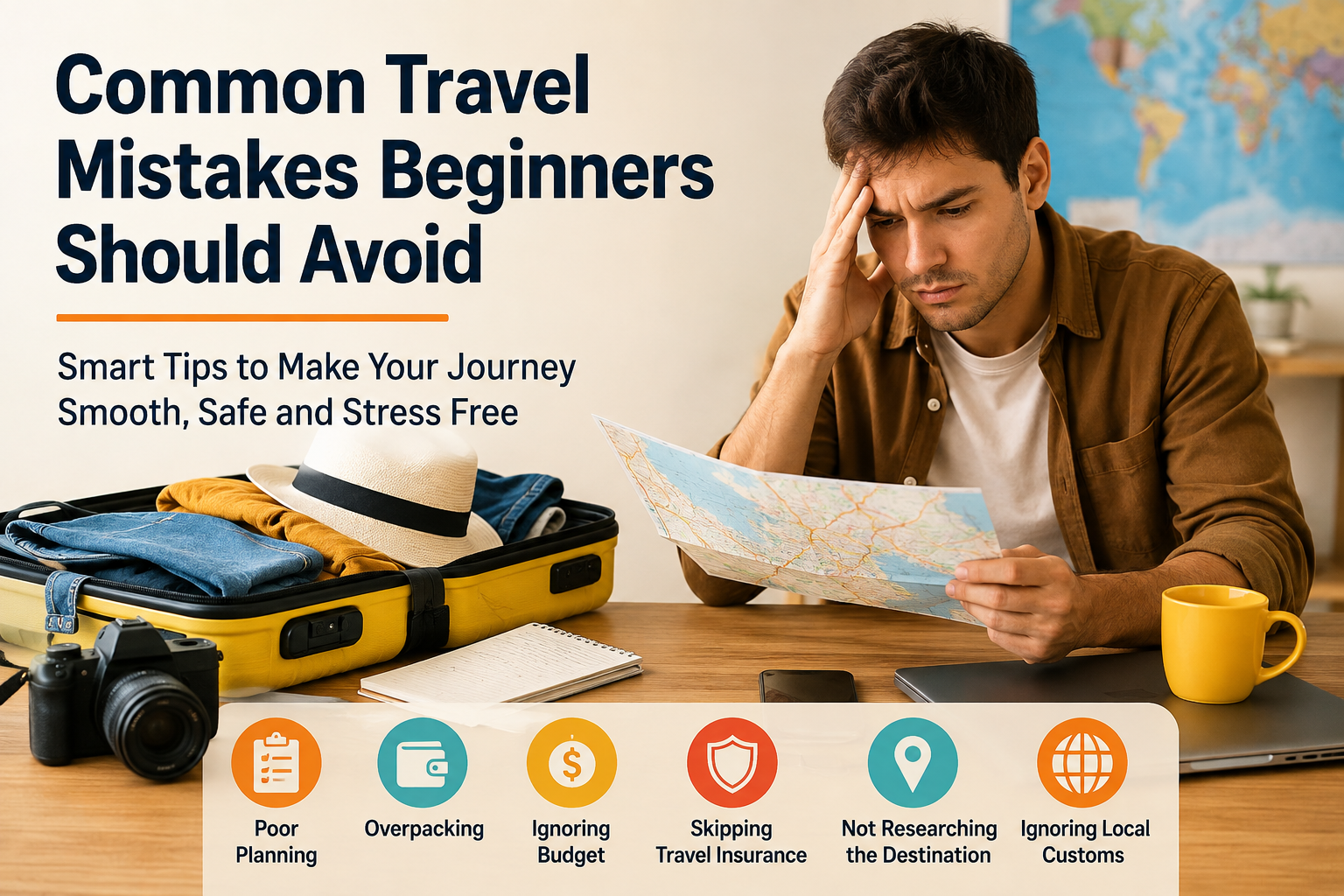
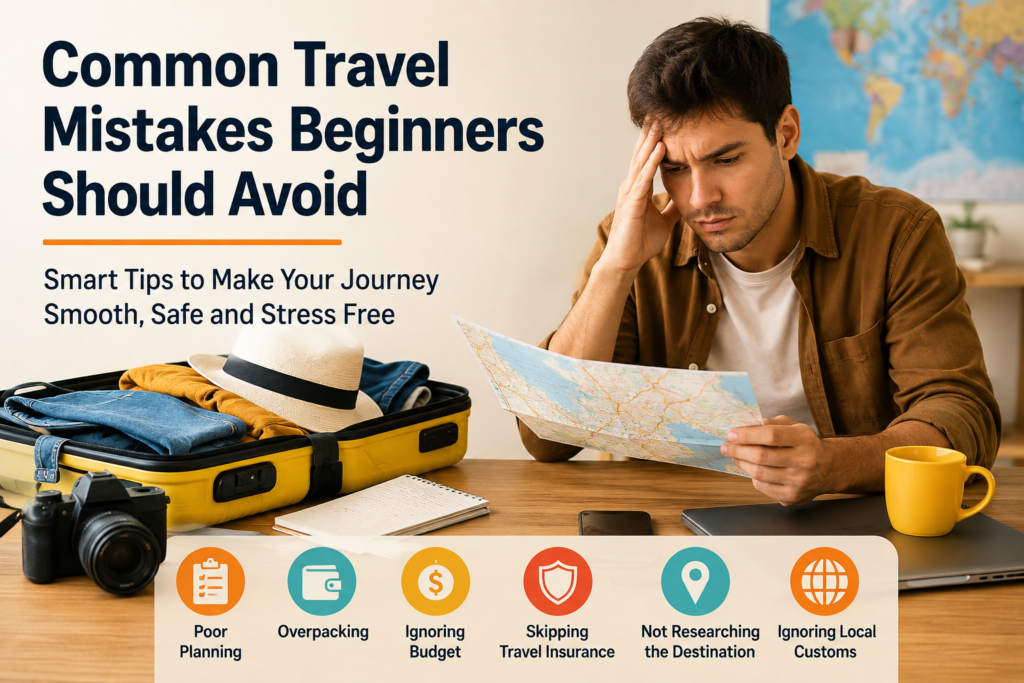
Traveling for the first time can be exciting, but it can also feel a little confusing. When I started learning about travel, I realized that many problems do not happen because a destination is difficult. They happen because travelers overlook simple things during planning. A missed document, an unrealistic schedule, poor budgeting, or carrying too much luggage can quickly turn an enjoyable trip into a stressful experience.
In my opinion, knowing the common travel mistakes beginners should avoid is one of the best ways to make your first journey easier. You do not need to become an expert traveler before your first trip. You simply need to prepare carefully, stay flexible, and learn from the mistakes that other travelers have already made.
1. Not Researching the Destination
One of the biggest travel mistakes beginners make is booking a trip without properly researching the destination. Looking at beautiful pictures online is not enough. Before traveling, I recommend learning about the local weather, transportation, currency, language, popular areas, local customs, and important travel rules.
A destination may have completely different weather from what you expect. Some attractions may also be closed on particular days, while public transportation may have limited operating hours.
I always believe that a little research before leaving home can save a lot of trouble after arrival. You do not need to plan every minute, but you should understand the basics of the place you are visiting.
2. Packing Too Much
Overpacking is another common mistake for first time travelers. It is easy to imagine every possible situation and put too many clothes, shoes, and accessories into your suitcase.
The problem becomes obvious when you have to carry that heavy luggage through airports, train stations, hotels, and busy streets.
My advice is to pack according to the actual length and purpose of your trip. Choose clothes that can be used in different combinations and avoid taking items you probably will not need.
Before closing your suitcase, ask yourself whether each item is genuinely useful. If the answer is no, leave it at home. Traveling with lighter luggage usually makes the entire experience more comfortable.
3. Forgetting Important Documents
Forgetting or incorrectly preparing travel documents can cause serious problems. Beginners sometimes focus so much on flights and hotels that they forget to check their passport validity, visa requirements, travel permits, or other necessary documents.
I recommend checking your documents well before your departure date. Keep digital copies of important documents on a secure device and, where appropriate, carry physical copies as well.
Your passport, identification documents, booking details, and other required papers should be easy to access when you need them.
Do not wait until the last day to discover that a document needs renewal or that a particular destination has additional entry requirements.
4. Making the Schedule Too Busy
When visiting a new place for the first time, it is tempting to see everything. This often leads beginners to create a schedule that is almost impossible to follow.
A packed itinerary may look impressive on paper, but real travel involves delays, traffic, queues, tiredness, weather changes, and unexpected opportunities.
Personally, I prefer leaving some free time between major activities. If I have a list of ten attractions, I would rather enjoy six or seven properly than rush through all ten.
A good travel itinerary should give you direction without making you feel like you are constantly racing against the clock.
5. Ignoring the Travel Budget
Another mistake beginners should avoid is traveling without a realistic budget. Many people calculate the cost of flights and hotels but forget about food, transportation, entrance fees, shopping, internet access, and unexpected expenses.
Before traveling, I recommend estimating your major expenses and keeping some extra money available for emergencies.
It is also useful to understand the local currency and payment methods. Some places may accept cards widely, while smaller businesses may prefer cash.
Having a simple daily spending limit can help you enjoy your trip without constantly worrying about money.
6. Booking Everything Without Checking the Details
Booking a flight or hotel is not something I would do by looking only at the price. Beginners sometimes choose the cheapest option and later discover inconvenient locations, strict cancellation policies, additional charges, or unsuitable schedules.
Before confirming a booking, check the important details carefully. Look at the location, check in time, check out time, baggage rules, cancellation conditions, and what is actually included in the price.
A slightly more expensive option can sometimes provide much better value and convenience.
7. Forgetting Travel Insurance
Travel insurance is often ignored by beginners because they hope everything will go according to plan. Unfortunately, unexpected situations can happen during any journey.
Depending on the policy and destination, travel insurance may provide protection for certain unexpected situations such as medical emergencies, trip interruptions, or lost belongings.
I believe travelers should at least research whether travel insurance is appropriate for their particular trip. Read the policy carefully rather than assuming every situation will automatically be covered.
8. Not Informing Someone About Your Travel Plans
When traveling, especially internationally or alone, it is sensible to let someone you trust know your basic plans.
Share important information such as your destination, accommodation details, and approximate travel dates with a family member or trusted friend.
You do not need to constantly report your location. The purpose is simply to make sure someone knows where you are supposed to be if they need to contact you.
This small habit can provide extra peace of mind during your journey.
9. Depending Completely on Your Phone
Smartphones are incredibly useful for modern travel. They can provide maps, translation, booking information, communication, and directions. However, relying completely on your phone can become a problem.
Your battery may run out. Mobile internet may not work. Your phone could be lost or damaged.
For important information, I like to keep some offline alternatives. Save important addresses, booking details, and maps when possible. Carry a power bank when appropriate, and know the basic location of your accommodation.
Technology should make travel easier, not become the only thing keeping your travel plans together.
10. Ignoring Local Customs
Every destination has its own culture and social expectations. One of the most important travel tips for beginners is to respect local customs.
This can include appropriate clothing, photography rules, religious practices, greetings, dining etiquette, and behavior in public places.
You do not need to know everything about another culture before visiting, but making a genuine effort to understand local customs shows respect.
In my experience, travelers who approach different cultures with curiosity and respect usually have more positive interactions with local people.
11. Carrying Too Much Cash
Having some local currency can be useful, but carrying large amounts of cash is not always necessary or practical.
Before traveling, learn about the common payment methods at your destination. Keep your money and important cards secure, and avoid keeping everything in one place.
It is also wise to have a backup payment method when possible. This can be especially useful if your primary card does not work or you encounter a place that does not accept it.
12. Forgetting to Check the Weather
Weather can completely change your travel experience. Beginners sometimes pack based on what the destination looks like in photographs rather than checking the forecast.
Before leaving, check the expected weather for the period of your visit. This helps you choose appropriate clothing and plan outdoor activities more realistically.
Weather conditions can also affect transportation and sightseeing, so having a flexible plan is always helpful.
13. Not Giving Yourself Enough Time at the Airport
Arriving at the airport too late is a stressful way to begin a trip. Security checks, baggage procedures, immigration, traffic, and unexpected queues can take longer than expected.
I prefer arriving with enough time to handle delays without panicking. The exact amount of time you need depends on the airport, airline, destination, and whether you are traveling internationally.
It is better to spend some extra time waiting than to begin your vacation by running through the airport.
14. Trying to Follow Every Online Recommendation
Travel blogs, videos, and social media can provide excellent ideas, but not every recommendation will suit you.
One of the biggest lessons I have learned about travel is that popular does not always mean perfect for everyone.
Choose activities based on your own interests, budget, available time, and comfort level. If you enjoy history, spend more time exploring museums and historical places. If you love nature, prioritize parks, mountains, beaches, or other outdoor experiences.
Your trip should reflect your interests rather than someone else’s perfect itinerary.
15. Not Leaving Room for Unexpected Experiences
Perhaps the most important travel mistake beginners make is trying to control everything.
Planning is important, but travel rarely goes exactly according to plan. A restaurant may be closed, the weather may change, or you may discover an interesting place that was never on your itinerary.
I believe some of the best travel memories can come from these unexpected moments.
Keep your important reservations organized, but allow yourself some flexibility. Sometimes getting slightly lost, discovering a quiet street, talking with a local person, or finding a small restaurant can become the highlight of the entire trip.
Final Thoughts
Avoiding common travel mistakes beginners should avoid does not mean planning every second of your journey. It means preparing enough to prevent simple problems while leaving room to enjoy the experience.
Research your destination, prepare your documents, create a realistic budget, pack lightly, check the weather, respect local customs, and give yourself enough time for transportation. Most importantly, remain flexible when things do not go exactly as planned.
From my point of view, the goal of a first trip should not be to travel perfectly. It should be to learn, explore, stay responsible, and enjoy the experience. Every journey teaches you something new, and the lessons from your first trip can make every future adventure easier and more enjoyable.