Traveling is one of my favorite ways to experience new places, meet different people, and take a break from everyday life. However, I have learned that a trip can quickly become stressful when things are not organized. Losing a charger, forgetting important documents, or searching through a messy suitcase can turn a good travel experience into a frustrating one.
For me, staying organized while traveling is not about following a complicated system. It is about preparing a few important things before leaving and keeping them in the right place throughout the trip. Once I developed a simple travel organization routine, I found that I could enjoy my trips with much less stress.
In this guide, I will share the practical travel organization tips that I find useful. These simple ideas can help you organize your luggage, travel documents, daily schedule, money, electronics, and other essentials.
Start With a Simple Travel Plan
The first step to staying organized while traveling is having a clear plan. You do not need to plan every minute of your trip, but you should know the important details before you leave.
I usually write down my travel dates, transportation details, accommodation information, important addresses, and the main places I want to visit. Keeping these details together makes it much easier to find information when I need it.
I also like to divide my trip into simple sections. For example, I may keep information about flights or transportation in one section, hotel details in another, and activities in another. This prevents important information from becoming scattered across different apps and notes.
Create a Travel Checklist
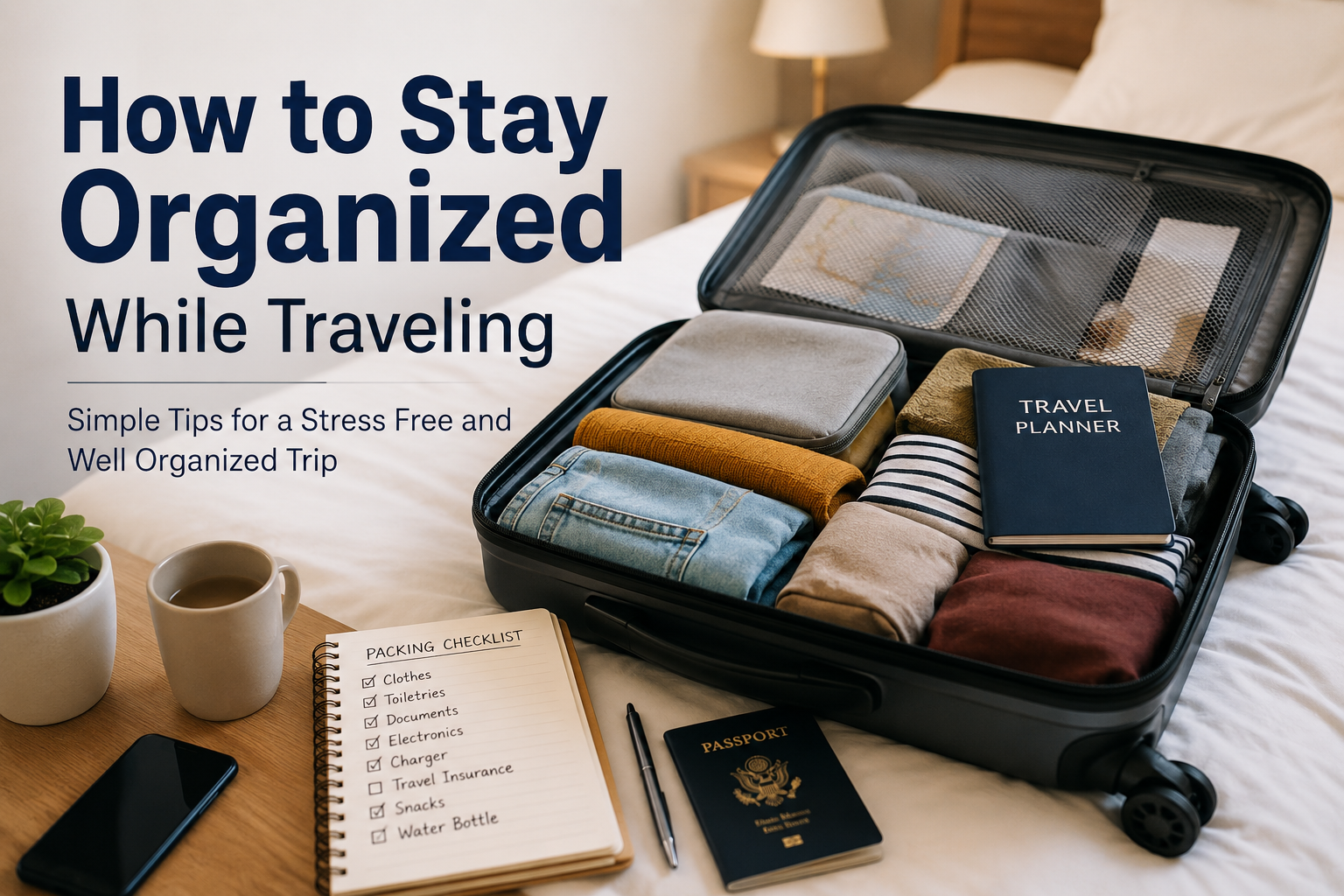
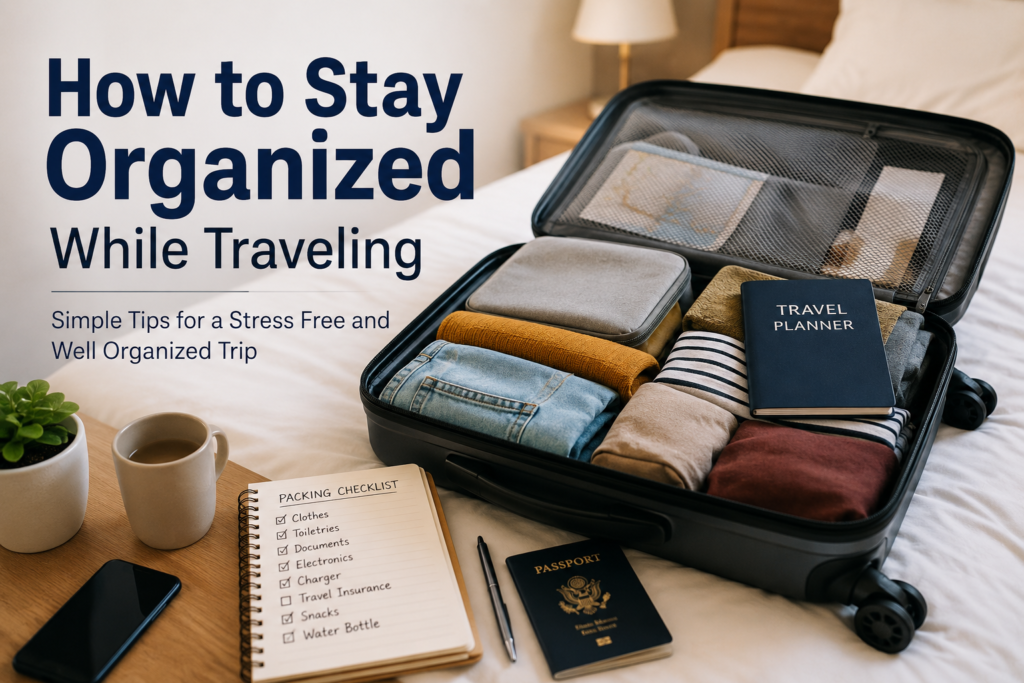
A travel checklist is one of the easiest ways to stay organized while traveling. Before every trip, I make a list of the things I need to take with me.
My checklist usually includes clothing, toiletries, travel documents, electronics, chargers, medications if needed, personal items, and other essentials.
I recommend making the checklist several days before your trip rather than a few hours before leaving. This gives you enough time to notice anything missing.
A checklist also helps prevent overpacking. When everything is written down, I can look at each item and ask myself whether I really need it.
Keep Important Documents Together
Travel documents should always have a dedicated place. Your passport, identification, tickets, booking details, travel insurance information, and other important documents should be easy to access.
I prefer keeping physical documents in a secure travel wallet or document holder. I also keep digital copies of important documents on my phone or in secure cloud storage.
This does not mean I depend completely on digital copies. Having both physical and digital backups can be useful if one becomes unavailable.
The most important rule is consistency. Once you decide where your passport and important documents belong, always return them to that same place.
Organize Your Suitcase
A messy suitcase can make traveling much harder. Instead of putting everything directly into the luggage, I prefer dividing my belongings into groups.
Packing cubes can be useful for separating shirts, trousers, underwear, and other clothing. Small bags can also help organize cables, toiletries, and personal items.
I usually place the things I will need first near the top of my luggage. For example, if I arrive late at night, I do not want to empty my entire suitcase just to find sleepwear or toiletries.
Another useful habit is to keep one small section of the suitcase available for items I may buy during the trip. This gives me some extra space and prevents the suitcase from becoming difficult to close.
Pack According to Your Trip
One of the biggest mistakes I see travelers make is packing too much. Staying organized while traveling becomes much easier when you have fewer unnecessary items.
Before packing, I think about the destination, weather, length of the trip, planned activities, and laundry options. These factors help me decide what I actually need.
I try to choose clothing that can be used in more than one situation. Neutral colors and simple combinations make it easier to create different outfits without carrying too many clothes.
The goal is not to pack everything you might possibly need. The goal is to pack the things you are most likely to use.
Give Everything a Specific Place
This is one of the most useful travel organization habits I have developed. Every important item should have a specific place.
For example, I keep my phone charger in one particular pocket. My passport stays in my travel wallet. Toiletries stay in a separate bag. Small electronics stay together.
When everything has a home, I spend less time searching for things.
This habit becomes especially valuable when moving between hotels or changing transportation. Before leaving a room, I can quickly check each usual location instead of searching everywhere.
Keep Electronics Organized
Modern travel often involves several electronic devices. Phones, cameras, headphones, tablets, laptops, power banks, and chargers can easily create a mess.
I recommend keeping electronic accessories in one small organizer. You can separate charging cables, adapters, memory cards, headphones, and other accessories using different compartments.
Before leaving your accommodation, check your charging area carefully. Chargers are surprisingly easy to forget because they are often left plugged into a wall near the bed.
I also recommend labeling similar cables if you travel with several of them. A little organization can save a lot of time.
Use Your Phone as an Organization Tool
Your smartphone can be one of the most useful travel organization tools available. I use mine to keep booking information, maps, notes, reminders, contact information, and travel plans in one place.
Before leaving, I save important addresses and booking details so I can access them easily.
I also download maps or other useful information when possible. Internet access is not always reliable, especially when traveling between different locations.
However, I do not recommend keeping everything only on your phone. A dead battery or technical problem can make digital information temporarily unavailable. Important details should have a backup when necessary.
Manage Your Money Carefully
Keeping money organized is another important part of travel. I prefer not to keep all my money and cards in one place.
For longer trips, having a primary payment method and a backup option can be useful. I also keep track of my spending so I know how much I have used during the trip.
A simple travel budget can include accommodation, transportation, food, activities, shopping, and emergency expenses.
I find that recording expenses at the end of each day takes only a few minutes. It also helps me avoid unpleasant surprises later.
Keep a Simple Daily Schedule
I enjoy having some flexibility during a trip, but a completely unplanned day can sometimes become confusing. I prefer to create a simple daily schedule.
I write down the main activity or two that I want to complete and leave enough free time between them.
This approach gives me structure without making the trip feel like a strict timetable.
It is also important to avoid planning too many activities in one day. Traveling takes time, and transportation delays or unexpected situations can change your plans.
Stay Organized at Your Hotel
Once I arrive at my accommodation, I try not to spread my belongings everywhere. I keep important items in predictable locations.
For example, I may keep my passport and wallet in a secure place, clothing in one area, toiletries in the bathroom, and electronics together.
When I return to the room after a busy day, I put things back instead of leaving them scattered around.
This takes only a few minutes but makes the next morning much easier.
Make a Quick Check Before Leaving
One of my favorite travel habits is doing a final room check before leaving any accommodation.
I check the bathroom, bedside table, charging points, drawers, closet, and under the bed. I also check my passport, wallet, phone, and luggage.
This small routine can prevent one of the most frustrating travel problems: leaving something important behind.
I recommend using the same checking order every time. A consistent routine makes it less likely that you will forget something.
Keep Your Travel Routine Simple
The best travel organization system is one you can actually follow. You do not need dozens of bags, complicated apps, or a perfect itinerary.
For me, organization comes down to a few simple habits. I plan the important details, use a checklist, organize my luggage, protect important documents, keep electronics together, and return things to their usual places.
These habits make traveling easier without taking away from the fun.
Final Thoughts
Learning how to stay organized while traveling can make a major difference in the overall travel experience. When your luggage is organized, documents are easy to find, money is under control, and your daily plans are clear, you can spend more time enjoying the destination and less time dealing with unnecessary problems.
From my experience, the secret is not perfection. Unexpected things can always happen during a trip. Flights can change, plans can move, and weather can be unpredictable.
The important thing is to create a simple system that helps you handle these situations calmly.
Start with a travel checklist, keep your important documents together, organize your suitcase, protect your electronics, manage your money, and give your belongings a regular place.
Once these habits become natural, staying organized while traveling becomes much easier. Most importantly, you will have more freedom to focus on what really matters: enjoying the journey, exploring new places, and creating memories that you will remember long after the trip is over.