Packing for a trip can sometimes feel harder than the trip itself. I have noticed that many travelers pack far more than they actually need because they are worried about forgetting something. The result is usually a heavy suitcase, crowded bags, and unnecessary stress during the journey.
In my opinion, learning how to pack light for a trip is one of the most useful travel skills anyone can develop. Traveling with less luggage makes airports easier, hotel stays more comfortable, and moving from one place to another much simpler. You also spend less time organizing your belongings and more time enjoying your trip.
The good news is that packing light does not mean traveling without the things you need. It means choosing carefully, planning ahead, and avoiding items that are unlikely to be useful.
Start With a Simple Travel Plan
Before I start packing, I first think about the trip itself. The destination, weather, number of days, planned activities, and type of accommodation all affect what I need to bring.
For example, a short city trip usually requires much less clothing than a two week vacation. If I know that I will spend most of my time walking around a city, I focus on comfortable clothes and shoes. If I am visiting a warm destination, I avoid taking heavy clothing that I will probably never wear.
This simple step can prevent overpacking before it starts.
Think about what you will actually do during the trip instead of packing for every possible situation. Packing for imaginary situations is one of the easiest ways to fill a suitcase with unnecessary items.
Make a Packing List
A packing list is one of my favorite ways to keep luggage under control. Without a list, it is easy to keep adding things because you are unsure whether you have packed everything.
I usually divide my list into simple groups such as clothing, toiletries, electronics, documents, and personal items.
Once everything is written down, I can see what I really need. I also recommend checking the list before putting anything into your bag. If something is not necessary, leave it out.
A good packing list should be practical rather than extremely long.
Choose Clothes That Work Together
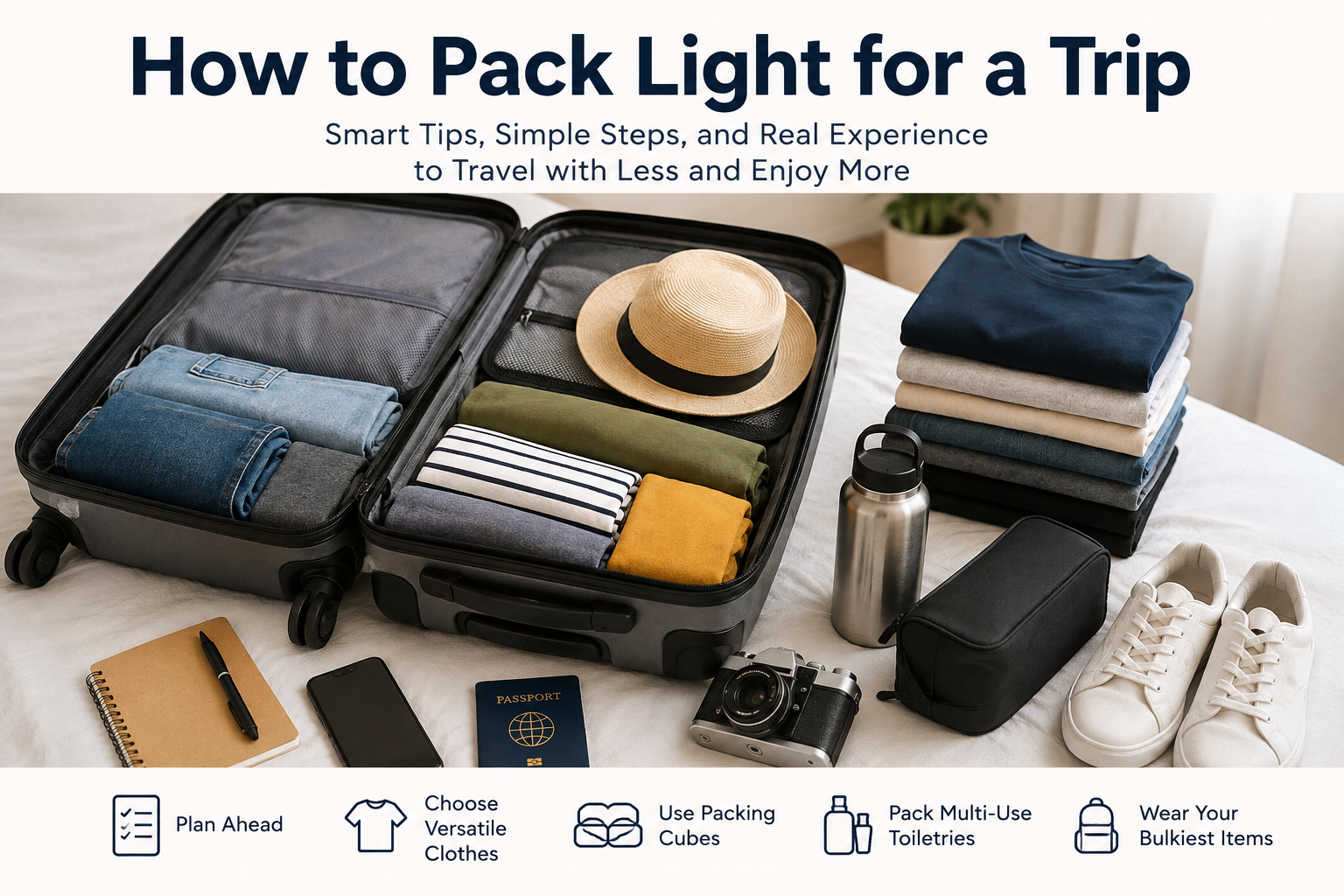
One of the biggest secrets to packing light is choosing versatile clothing. Instead of packing a different outfit for every day, I prefer clothes that can be combined in several ways.
For example, a few neutral shirts can work with different trousers or shorts. A simple jacket can be used with several outfits. Comfortable clothing that can be worn during the day and evening is especially useful.
When selecting clothes, I ask myself whether I can wear the item more than once. If the answer is no, I think carefully before packing it.
This approach helps reduce the amount of clothing while still giving you enough options.
Follow the Three Outfit Rule
A useful approach is to prepare around three complete outfits before packing everything. Once those outfits are ready, look at how many pieces can be mixed and matched.
You might find that several shirts work with the same pair of trousers. You may also discover that one jacket can complete multiple outfits.
This method is especially helpful for people who regularly pack too many clothes.
Remember that you do not need a completely different outfit for every photograph. Comfortable and reusable clothing is usually more valuable than having a huge wardrobe while traveling.
Pack According to the Weather
Checking the weather forecast before your trip can save a lot of luggage space. I always recommend checking expected temperatures and conditions close to the departure date.
If the weather is expected to be warm, there is no reason to pack several heavy sweaters. If rain is likely, one lightweight rain jacket may be more useful than multiple bulky layers.
For changing weather, layering is often better than carrying one very heavy piece of clothing. Layers can be added or removed depending on the temperature.
This is a simple travel packing tip, but it can make a big difference.
Limit Your Shoes
Shoes are often among the heaviest items in luggage. They also take up considerable space, so I try to keep footwear to a minimum.
For many trips, one comfortable pair of walking shoes may be enough. If another pair is genuinely necessary, choose something lightweight and suitable for more than one occasion.
I also recommend wearing your heaviest shoes while traveling instead of placing them inside your suitcase.
Before packing another pair, ask yourself how often you are realistically going to wear it. If the answer is only once, it may not be worth the space.
Use Packing Cubes Wisely
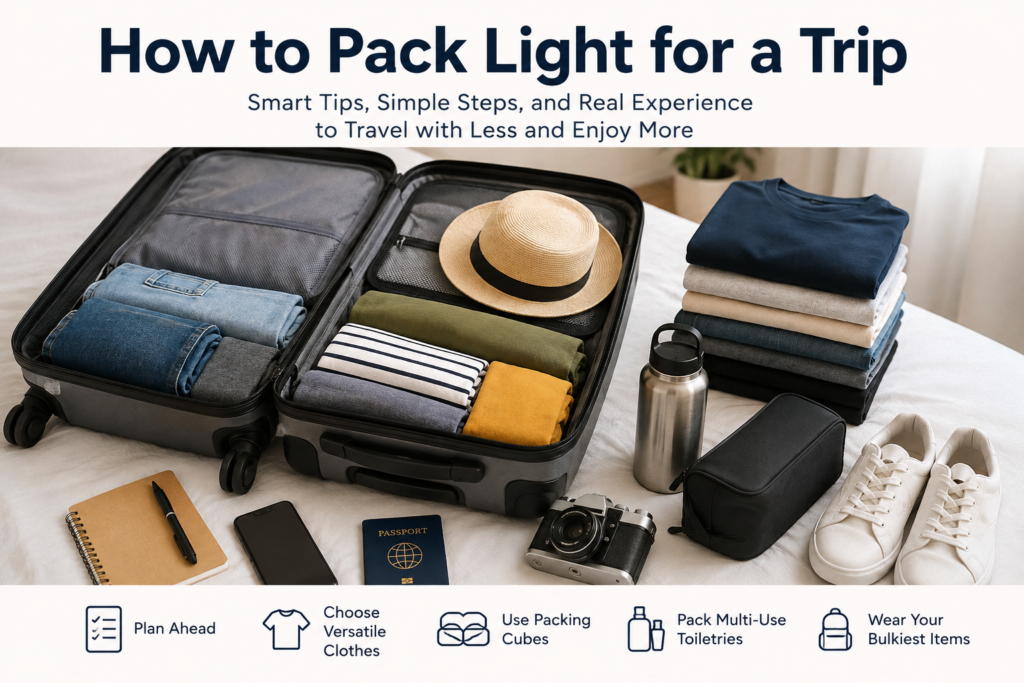
Packing cubes can make a suitcase easier to organize. They do not magically reduce the weight of your belongings, but they can help you control how much you pack.
I like using separate cubes for shirts, underwear, and other clothing. This makes it easier to find things without disturbing the entire suitcase.
Packing cubes can also encourage you to set limits. Once a cube is full, I know that I probably do not need to add more clothes.
The key is to use them as an organization tool rather than an excuse to pack more.
Keep Toiletries Simple
Toiletries can quickly become another source of unnecessary weight. Instead of carrying large bottles, I prefer smaller travel friendly containers when possible.
Think about the products you actually use every day. You may not need five different skincare products, several fragrances, or full size bottles for a short trip.
Many hotels and accommodations also provide basic toiletries, although I always check beforehand if I depend on a particular product.
A small toiletry bag is usually enough for most trips.
Avoid Packing “Just in Case” Items
One of the biggest mistakes I see when people pack is adding items simply because they might need them.
The problem with “just in case” packing is that there are endless possibilities. You could pack for cold weather, rain, formal events, outdoor activities, and every other situation even when your trip does not require them.
Instead, I recommend asking whether the item has a realistic purpose during the trip.
If you genuinely need something later, there may also be an opportunity to buy it at your destination. Of course, important personal items and necessary medications should always be planned for carefully.
Reduce Your Electronics
Electronics can also make luggage heavier than expected. Before leaving, I decide which devices are genuinely necessary.
For many travelers, a phone can handle several tasks that previously required separate devices. It can work as a camera, map, entertainment device, communication tool, and travel information source.
If I do take additional electronics, I keep the cables organized and avoid carrying chargers for devices I am not bringing.
A small electronics pouch can make everything easier to manage.
Wear Your Bulkiest Clothes
Another simple way to pack light for a trip is to wear your largest clothing items during transportation.
If you need a jacket, boots, or a thick sweater, wearing them can save valuable suitcase space. You can always remove the jacket during the journey if you become uncomfortable.
This technique is particularly useful when traveling with only a carry on bag.
Leave Some Space in Your Bag
I do not recommend filling a suitcase completely before leaving home. Leaving some empty space can make your trip much more comfortable.
You may buy souvenirs, gifts, snacks, or other useful items during your journey. If your suitcase is already completely full, bringing anything back becomes difficult.
Extra space also makes it easier to repack your belongings at the end of the trip.
Consider Laundry During Longer Trips
For longer travel, laundry can completely change the way you pack. Instead of carrying enough clothes for every single day, you can bring fewer items and wash them during the trip.
Many hotels, hostels, apartments, and laundromats offer laundry facilities or services. Even when professional laundry is not available, lightweight clothing can sometimes be washed by hand.
This is one reason I prefer quick drying and versatile clothing for longer journeys.
Do a Final Packing Check
After packing, I recommend doing one final review. Take everything out mentally and ask yourself whether each item has a clear purpose.
If you find something that you forgot about while packing, that can be a sign that you probably do not need it.
I also check important travel documents, money, identification, booking information, chargers, and other essential items separately from ordinary clothing.
The final check is not about adding more things. It is about removing unnecessary things and making sure the important ones are ready.
Final Thoughts
Learning how to pack light for a trip is mostly about changing your mindset. You do not need to take everything you own just because you are traveling away from home. You need the right things for the specific journey you are taking.
From my experience, the best approach is to plan your trip, create a simple packing list, choose versatile clothing, limit your shoes, reduce toiletries, organize electronics, and avoid unnecessary items.
Packing light can make travel feel easier from the moment you leave your home. You can move through airports more comfortably, spend less time handling luggage, and avoid the frustration of searching through an overloaded suitcase.
The goal is not to see how little you can carry. The goal is to carry what you need and leave behind what you do not.
Once you develop this habit, light packing for travel becomes much easier. With a little planning and practice, you can enjoy your trip with a lighter bag and a much more relaxed mind.
Primary Keyword: How to Pack Light for a Trip
Secondary Keywords: pack light for travel, light packing tips, travel packing tips, how to pack for a trip, minimalist travel packing, carry on packing tips, packing tips for beginners