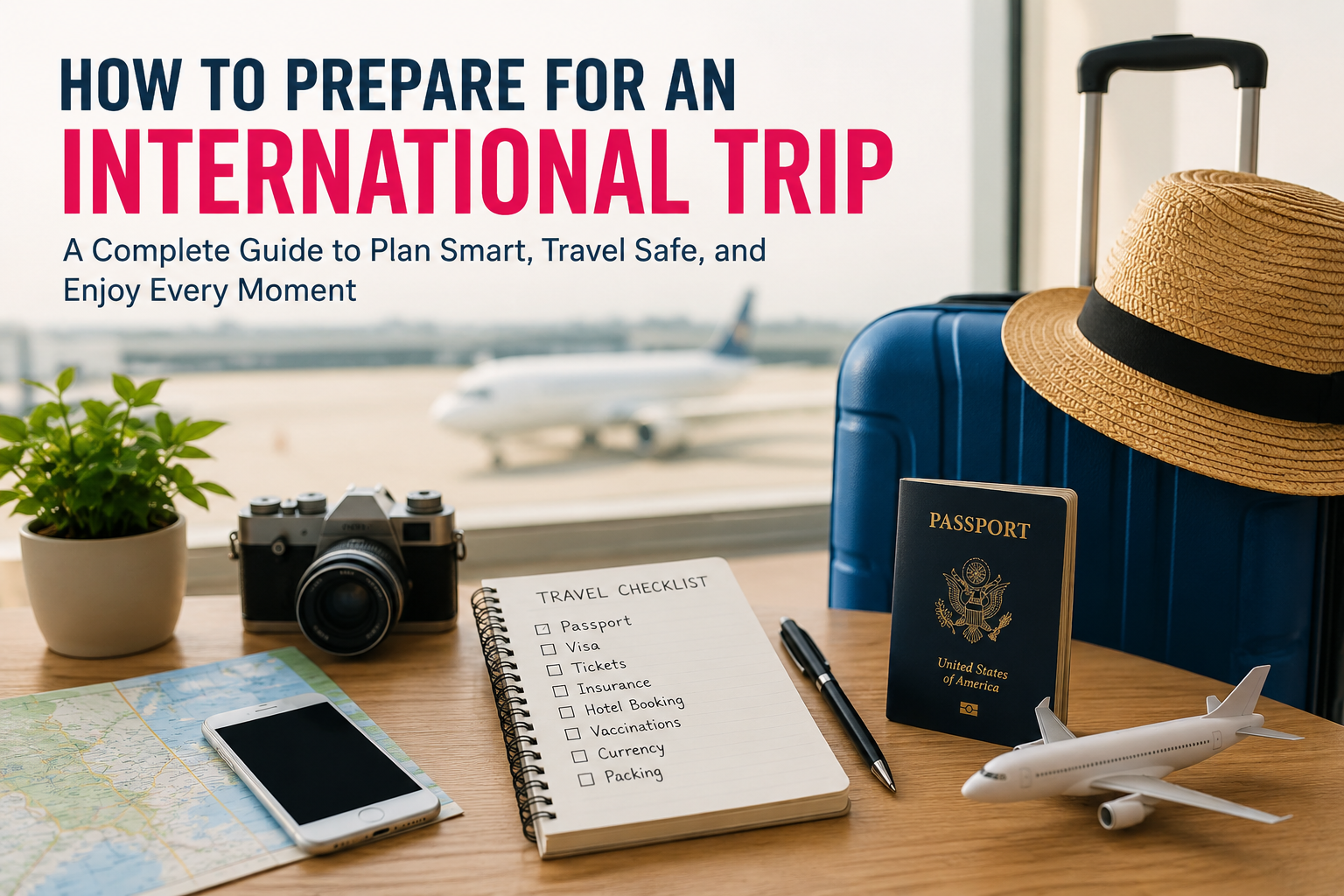
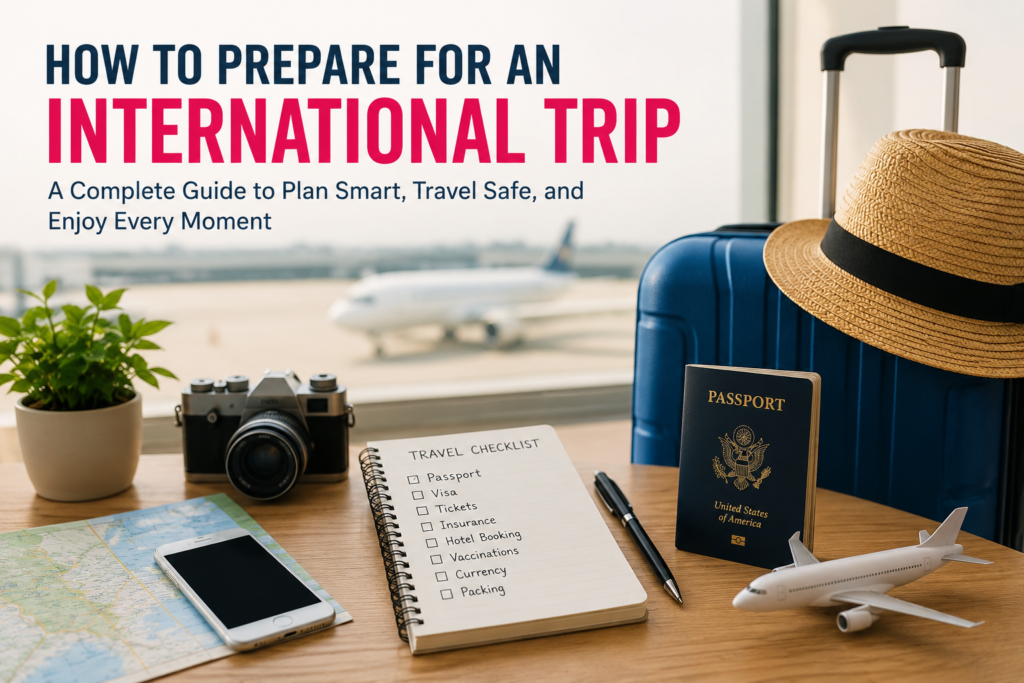
Preparing for an international trip can feel exciting and a little stressful at the same time. When I plan a trip abroad, I try to prepare everything early because small mistakes can create unnecessary problems later. Traveling to another country is different from traveling within your own country because you have to think about passports, visas, flights, money, travel insurance, local rules, accommodation, and many other details.
In my experience, the best way to enjoy an international trip is to prepare before leaving home. Good preparation gives you confidence and allows you to focus more on enjoying the destination instead of worrying about things that could have been handled earlier.
In this guide, I will share how I would prepare for an international trip step by step, especially if it is your first time traveling abroad.
1. Choose Your Destination Carefully
The first step in preparing for an international trip is choosing the right destination. I always consider my budget, travel goals, weather, safety, culture, and the amount of time I have available.
Some destinations are ideal for short vacations, while others require more time because of long flights and multiple places to visit. I also recommend checking the best season to visit before booking anything. A beautiful destination can become less enjoyable if you arrive during extreme weather or a very busy tourist season.
Think about what you want from the trip. You may want beaches, history, nature, shopping, food, adventure, or a peaceful vacation. Choosing a destination based on your interests can make the entire experience more enjoyable.
2. Check Your Passport
Your passport is one of the most important documents for international travel. Before making final travel arrangements, check whether your passport is valid and whether it has enough blank pages if your destination requires them.
I personally recommend checking passport requirements as early as possible. Some countries require your passport to remain valid for several months after your planned arrival or departure date.
Also, make a digital copy of your passport and keep another copy somewhere separate from the original. This can be useful if your passport is lost or stolen while traveling.
3. Find Out If You Need a Visa
Visa requirements can vary depending on your nationality and destination. Never assume that you can enter another country without checking the current requirements.
Visit the official immigration or embassy website of your destination and check whether you need a tourist visa, electronic travel authorization, visa on arrival, or another type of entry permission.
If a visa is required, apply early. Processing times can vary, and delays can affect your travel plans. I would rather complete this step early than wait until the last moment and feel stressed about whether my application will be approved.
4. Set a Realistic Travel Budget
Creating a travel budget is one of the most useful things you can do before an international trip. The cost of a trip is not limited to the flight and hotel.
When I create a travel budget, I think about flights, accommodation, food, local transportation, activities, travel insurance, visa fees, shopping, mobile data, airport transportation, and emergency expenses.
It is also a good idea to keep some extra money for unexpected situations. You might need to pay for an additional taxi, replace a lost item, or change a booking.
A realistic budget helps you enjoy your vacation without constantly worrying about money.
5. Book Your Flights and Accommodation
Once your destination, dates, and budget are clear, you can start booking your flights and accommodation.
I recommend comparing different flight options instead of immediately choosing the first one you see. Consider baggage allowance, arrival time, number of stops, airport location, and total travel time.
For accommodation, choose a location that makes transportation convenient. A slightly more expensive hotel in a central and convenient area may sometimes save money on transportation.
Before booking, read recent reviews and carefully check the cancellation policy, check in time, included facilities, and exact location.
6. Research Entry Requirements and Local Rules
Every country has its own rules, and travelers should understand them before arrival. Check official government sources for entry requirements, customs regulations, restricted items, and other important information.
I also like to learn a little about local culture before traveling. Understanding basic customs can help you avoid uncomfortable situations.
For example, clothing expectations, photography rules, public behavior, tipping practices, and religious customs can be different from what you are used to at home.
A little research shows respect for the local culture and can make your trip smoother.
7. Consider Travel Insurance
Travel insurance is something many people ignore until they need it. I believe it is worth considering, especially when traveling internationally.
Depending on the policy, travel insurance may provide protection for certain medical emergencies, trip cancellations, lost baggage, delays, or other unexpected situations.
Before buying a policy, read the terms carefully. Make sure you understand what is covered, what is excluded, and how to make a claim.
The cheapest policy is not always the best choice. Look for coverage that matches your destination and the type of activities you plan to enjoy.
8. Plan Your Money and Payment Methods
Money is another important part of international travel preparation. Find out what currency is used at your destination and check which payment methods are commonly accepted.
I prefer having more than one way to access money. For example, you can carry a small amount of local currency while also keeping a bank card for other expenses.
Before traveling, inform your bank if necessary and check whether your card works internationally. You should also understand possible foreign transaction fees and ATM charges.
Avoid carrying all your cash in one place. Keeping money and cards in separate secure locations can reduce the impact of loss or theft.
9. Prepare Your Phone and Internet
Your smartphone can be extremely useful during an international trip. Before leaving, make sure you can access maps, translation tools, booking information, emergency contacts, and communication apps.
Check whether your mobile provider offers international roaming. Depending on your destination, you may also consider a local SIM card or an eSIM.
I recommend downloading important maps and travel information before leaving home so you can access them even when the internet is unavailable.
Also remember to bring the correct charging adapter for your destination. A small adapter can save you from a major inconvenience.
10. Make a Simple Travel Itinerary
You do not need to plan every minute of your vacation. In fact, I think an overly packed itinerary can make travel tiring.
Instead, create a simple daily plan. Write down the places you really want to visit, opening times, estimated travel time, and important reservations.
Leave some free time between activities. You may discover a beautiful street, interesting restaurant, local market, or unexpected attraction that was not included in your original plan.
A flexible travel itinerary gives you structure while still allowing you to enjoy spontaneous experiences.
11. Pack Smartly
Packing for an international trip becomes easier when you focus on essentials. I recommend checking the weather forecast and planning your clothing around the conditions.
Pack versatile clothes that can be used for different activities. Do not take too many unnecessary items because heavy luggage can make airports and transportation more difficult.
Important items usually include your passport, visa documents if required, money, cards, medications or personal essentials, phone charger, travel adapter, basic toiletries, and appropriate clothing.
Keep important documents and valuables in your carry on bag rather than your checked luggage.
12. Prepare Important Documents
Before leaving, organize all important travel documents in one secure place. These may include your passport, visa, flight confirmation, hotel booking, travel insurance details, transportation reservations, and emergency contacts.
I also recommend keeping digital copies of important documents in a secure location that you can access while traveling.
Having everything organized saves time when you need to show information at the airport, hotel, immigration counter, or another location.
13. Learn Basic Information About Your Destination
Before traveling, learn a few basic facts about the country you are visiting. Learn the local currency, common language, time zone, emergency services, transportation system, and basic cultural practices.
Learning a few simple local phrases can also be helpful. Even if you cannot speak the language fluently, saying basic greetings or thank you in the local language can create a positive impression.
I also recommend checking the location of your embassy or consulate if you are traveling far from home. You may never need it, but knowing where to find official assistance can provide peace of mind.
14. Prepare for the Airport
International airports can be confusing, especially during your first trip abroad. Check your airline’s baggage rules and arrive at the airport with enough time for check in, security, immigration, and boarding.
Keep your passport and boarding documents easily accessible.
Wear comfortable clothing and keep important items organized. If you have a long flight, carry a few useful items such as headphones, a water bottle that can be filled after security, and something to keep you comfortable during the journey.
15. Keep Emergency Plans Ready
Even with excellent preparation, unexpected situations can happen. Your flight may be delayed, your luggage may arrive late, or you may lose an important item.
I always recommend keeping emergency contact information easily accessible. Know how to contact your bank, airline, travel insurance provider, accommodation, and local emergency services.
Do not panic if something goes wrong. Take a moment to understand the situation and then deal with one problem at a time.
Conclusion
Preparing for an international trip does not have to be complicated. The key is to start early and organize the important details before your departure.
From checking your passport and visa requirements to booking accommodation, creating a travel budget, arranging travel insurance, preparing your phone, packing carefully, and learning about your destination, every small step can make your journey easier.
From my point of view, good preparation is not about planning every single moment. It is about making sure the important things are ready so you can travel with confidence.
An international trip should be an opportunity to experience new places, meet different people, taste new food, and create memories. When you prepare properly, you can spend less time worrying about problems and more time enjoying the adventure.
If you are preparing for your first international trip, start with the basics, make a simple plan, double check your documents, and give yourself enough time. A little preparation before leaving home can make a huge difference once you arrive at your destination.