Planning a short vacation can be one of the best ways to take a break from a busy routine without spending too much time or money. In my opinion, a short trip does not need a complicated schedule or a huge budget. With a little planning, even a two or three day vacation can give you a refreshing experience and create memories that stay with you for a long time.
When I plan a short vacation, I focus on a few important things such as choosing the right destination, setting a realistic budget, booking comfortable accommodation, planning activities, and leaving enough free time to relax. The goal is not to visit every possible place. The goal is to enjoy the trip without feeling rushed.
In this article, I will share how I personally approach planning a short vacation and some simple ideas that can make your next getaway easier and more enjoyable.
Choose the Right Destination
The first step in planning a short vacation is choosing a destination that matches the amount of time you have. If you only have two or three days, I would avoid choosing a place that requires many hours of travel unless the journey itself is part of the experience.
For a short vacation, a nearby city, beach, mountain area, historical town, or peaceful countryside location can be a great choice. The shorter the travel time, the more time you will have to enjoy the destination.
I also think about the purpose of my trip before choosing a place. If I want to relax, I look for a peaceful destination. If I want adventure, I choose a place with outdoor activities. If I want to explore culture and history, I look for museums, historical sites, local markets, and traditional food.
Choosing the right destination can make your entire short vacation much easier.
Decide How Many Days You Have
Before making reservations, clearly decide how many days you can spend on your trip. A short vacation could be a weekend trip, a two day getaway, or a three day holiday.
I recommend considering travel time when counting your days. For example, if you spend most of your first day traveling and most of your final day returning home, you may have less time at your destination than you expect.
Try to make the schedule realistic. If you have only three days, you do not need to create a plan that looks like a week long vacation. A simple plan with a few meaningful activities is usually better.
Set a Travel Budget
Budget planning is one of the most important parts of a short vacation. I always recommend deciding how much you are comfortable spending before booking anything.
Your travel budget can include transportation, accommodation, food, activities, shopping, entrance fees, and emergency expenses. It is also a good idea to keep a small amount of extra money available for unexpected costs.
One mistake people sometimes make is spending most of their budget on accommodation and then having very little left for activities and food. I prefer to divide the budget into different categories so I know where my money is going.
You do not need an expensive vacation to have a good experience. Sometimes a simple hotel, local restaurant, and free attractions can make a trip just as enjoyable as an expensive holiday.
Plan Your Transportation
Transportation can have a major effect on a short vacation. Since you have limited time, choose a travel option that is comfortable and convenient.
Depending on your destination, you might travel by car, bus, train, or airplane. Compare travel time, cost, convenience, and departure schedules before making your decision.
If I am traveling by car, I usually check the route before leaving and identify useful stops along the way. If I am using public transportation, I check departure and arrival times carefully.
For a short vacation, arriving at your destination early can give you more time to explore. Similarly, choosing a convenient return schedule can help you enjoy the final day instead of spending most of it waiting for transportation.
Book Comfortable Accommodation
Your accommodation should match your budget and travel plans. You do not necessarily need a luxury hotel, especially if you expect to spend most of your time exploring.
When choosing accommodation, I look at location, cleanliness, safety, reviews, available facilities, and distance from the places I want to visit.
A hotel that is slightly more expensive but located close to major attractions may actually save money on transportation. For a short vacation, location can be more important than having many unnecessary facilities.
I also recommend checking the check in and check out times before booking. This small detail can prevent problems when you arrive or leave.
Create a Simple Vacation Itinerary
A simple vacation itinerary can help you use your limited time wisely. However, I do not recommend filling every minute of the trip with activities.
For example, you might plan one major activity in the morning, another in the afternoon, and a relaxed evening. This gives you enough structure without making the trip feel like work.
Before traveling, make a short list of the places you really want to see. Then organize them according to location. Visiting nearby attractions on the same day can save time and transportation costs.
I also leave some empty space in my itinerary. Unexpected opportunities are often some of the most enjoyable parts of traveling.
Research Things to Do
Researching things to do before your trip can help you discover activities that match your interests. You can look for popular attractions, local restaurants, parks, museums, viewpoints, markets, and cultural experiences.
I recommend checking opening hours, ticket prices, reservation requirements, and expected visiting times before you go.
At the same time, do not depend completely on online recommendations. Ask local people for suggestions when possible. Locals can sometimes recommend quiet places that are not crowded with tourists.
For a short vacation, choose a few activities that are genuinely interesting to you rather than trying to see everything.
Pack Only What You Need
Packing for a short vacation should be simple. I prefer to pack according to the weather, planned activities, and length of the trip.
For most short trips, you may need comfortable clothes, toiletries, important documents, chargers, medicines you normally use, comfortable shoes, and any personal items you need every day.
Checking the weather forecast before packing can help you avoid carrying unnecessary clothing.
I also recommend keeping important documents and valuables in a secure place. If you are traveling by air, check the baggage rules before leaving home.
Keep Your Schedule Flexible
One of the biggest lessons I have learned from traveling is that everything does not always go according to plan. Transportation can be delayed, weather can change, or a place can be unexpectedly crowded.
That is why I believe a flexible schedule is important.
If something does not work out, do not let it ruin the entire vacation. Have one or two alternative activities in mind. You might discover something even better than your original plan.
A short vacation should give you a break from stress, not create more stress.
Plan Your Meals
Food is an important part of any vacation. Before traveling, I usually research a few local restaurants or popular foods that I would like to try.
However, I do not plan every meal in advance. Sometimes discovering a small local restaurant while exploring a destination can become one of the best memories of the trip.
Keep your food budget in mind, especially if you are traveling with family or friends. You can balance restaurant meals with affordable local options.
Trying local food can also give you a better understanding of the culture and lifestyle of the destination.
Prepare Before Leaving Home
A little preparation before departure can make your short vacation much easier. I recommend checking your reservations, transportation details, weather, travel documents, and important contact information before leaving.
Make sure your phone is charged and carry a suitable charger or power bank if needed. It is also useful to save important booking details so you can access them easily.
If someone needs to know about your travel plans, share the basic details with them. This is especially useful when traveling alone.
Avoid Overplanning
Although planning is important, overplanning can make a vacation stressful. If every hour is scheduled, you may feel like you are completing tasks instead of enjoying your trip.
I prefer to create a basic structure and then allow myself enough freedom to explore.
For example, instead of planning ten attractions, choose three or four important places. If you have extra time, you can always add another activity.
Remember that relaxing at a café, walking around a beautiful area, watching a sunset, or simply enjoying the surroundings can also be part of a successful vacation.
Make the Most of Your Short Vacation
A short vacation can be extremely rewarding when you focus on quality rather than quantity. You do not need to travel far or spend a large amount of money to enjoy a meaningful break.
Choose a destination that fits your available time, create a realistic travel budget, book convenient accommodation, plan a few activities, and pack carefully. Most importantly, give yourself enough time to relax.
In my view, the best vacation is not the one where you visit the most places. It is the one where you return home feeling refreshed and happy.
Final Thoughts
Learning how to plan a short vacation does not have to be complicated. The key is to keep your plans realistic and focus on what matters most to you.
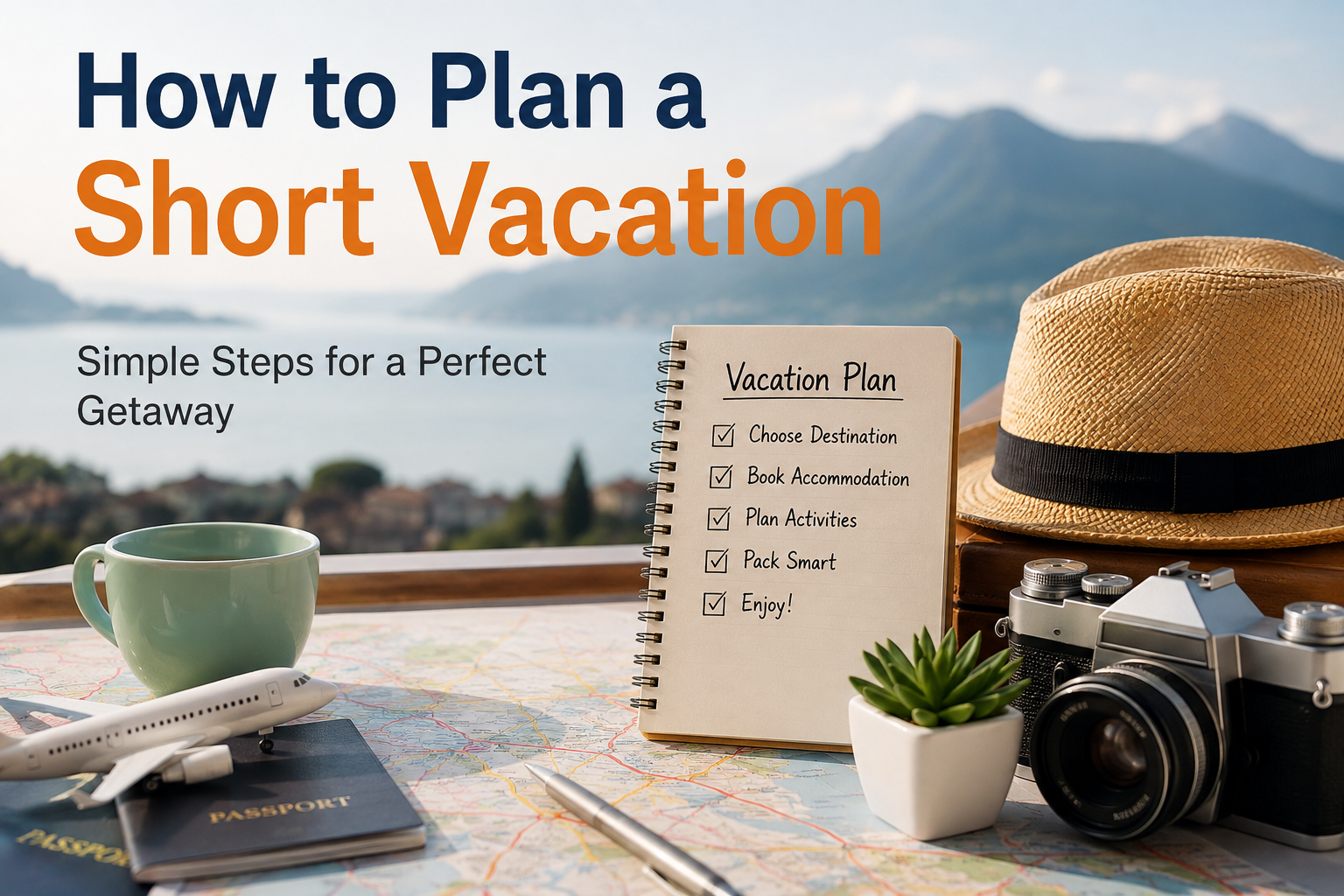
Start by choosing the right destination and deciding how many days you have. Set a budget, arrange transportation, book suitable accommodation, and create a simple vacation itinerary. Research activities, pack only what you need, and leave room for unexpected experiences.
With these simple steps, you can enjoy a comfortable and memorable short vacation without unnecessary stress. Sometimes, a few days away from your normal routine are all you need to feel refreshed and ready for what comes next.