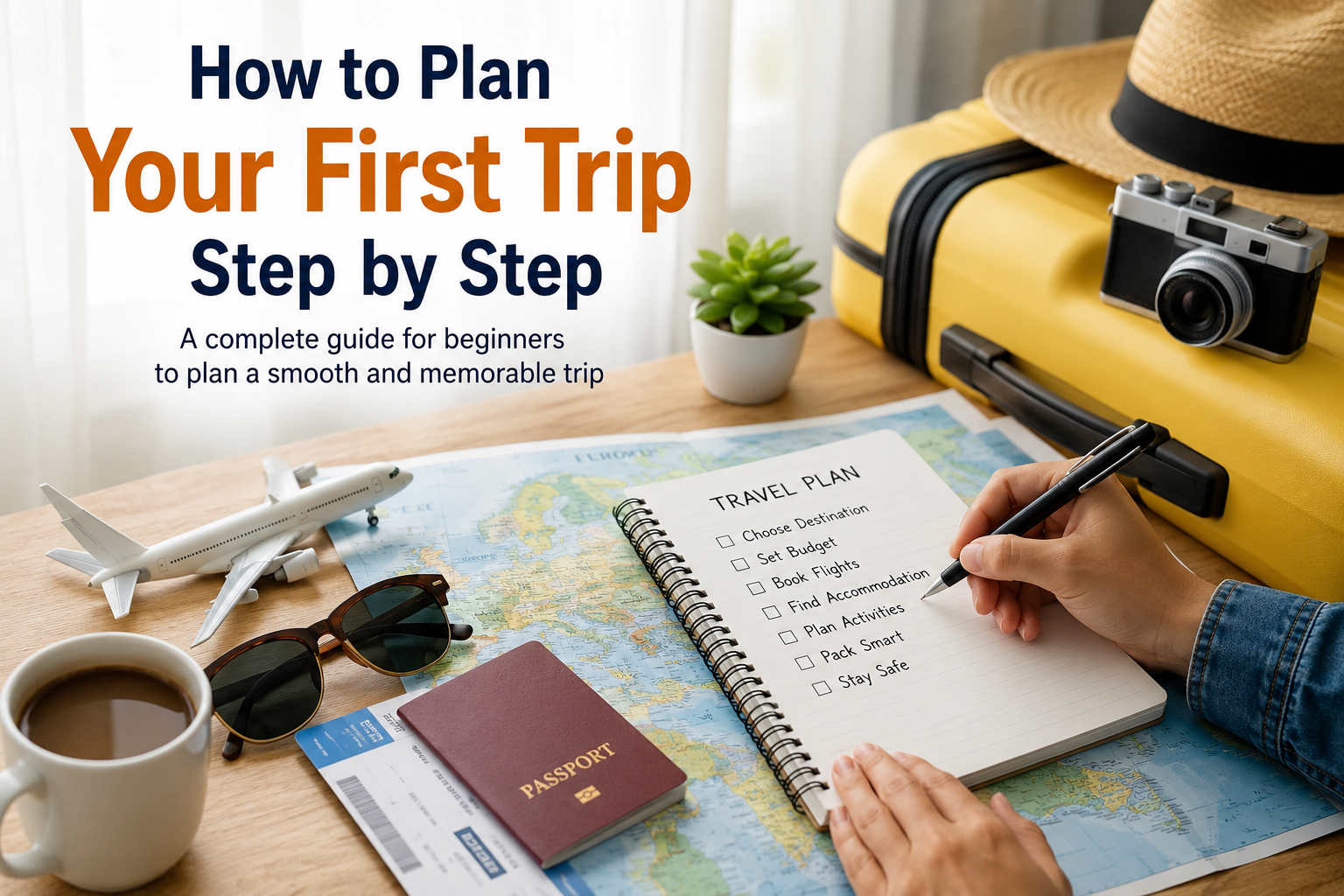
Planning your first trip can feel exciting, but it can also feel confusing when you do not know where to start. I remember that traveling for the first time can bring many questions to mind. Where should I go? How much money will I need? Where should I stay? What should I pack? These questions are completely normal.
In my opinion, the best way to enjoy your first trip is to plan it step by step instead of trying to arrange everything at once. A simple travel plan can save money, reduce stress, and help you enjoy your destination with confidence.
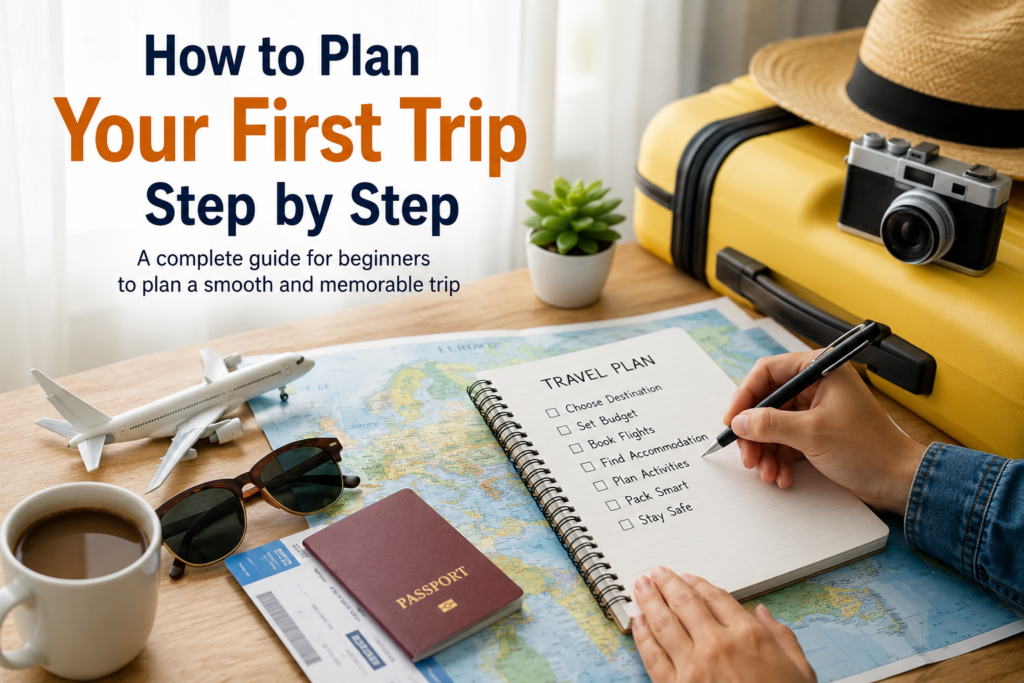
In this guide, I will explain how to plan your first trip from choosing a destination to returning home. These practical travel planning tips are useful for beginners who want to organize a smooth and enjoyable journey.
1. Choose Your Destination
The first step in planning your first trip is choosing where you want to go. This decision should depend on your interests, budget, available time, and travel experience.
If this is your first trip, I recommend choosing a destination that is relatively easy to explore. You do not necessarily need to travel very far. A nearby city, famous tourist destination, or peaceful place within your country can be an excellent choice.
Think about what you want from your trip. Do you want to see historical places, enjoy nature, relax at a beach, experience local food, or explore a busy city?
Once you know what type of experience you want, selecting a destination becomes much easier.
2. Decide Your Travel Budget
One of the most important parts of travel planning is setting a realistic budget. I believe it is better to plan a simple trip that you can comfortably afford than to spend too much money just to make the trip look impressive.
Write down the main expenses you expect to have. These may include transportation, accommodation, food, entrance tickets, local transportation, shopping, and emergency expenses.
Do not forget to keep some extra money for unexpected situations. Prices can change, transportation can cost more than expected, or you may discover something interesting that you want to experience.
A travel budget gives you a clear idea of what you can afford and helps you make better decisions throughout the trip.
3. Choose Your Travel Dates
After deciding your destination and budget, choose your travel dates. Consider your work, studies, family responsibilities, weather, and local events.
Before booking anything, check the typical weather during your planned travel period. A beautiful destination may not be enjoyable if you visit during extreme weather or a period when many attractions are closed.
If your schedule is flexible, compare different dates. Sometimes traveling a few days earlier or later can make transportation and accommodation more affordable.
I also recommend giving yourself enough time to prepare. Rushing everything at the last moment can make your first trip unnecessarily stressful.
4. Research Your Destination
Good research can make a huge difference in your travel experience. Before leaving, learn some basic information about your destination.
Research the popular attractions, local transportation, neighborhoods, food options, cultural customs, and safety advice. You do not need to know everything. Just learn enough to feel comfortable when you arrive.
I like to make a short list of places that I genuinely want to visit. This is better than creating a schedule so full that there is no time to relax.
Read recent traveler reviews and compare information from several reliable sources. This can help you avoid common mistakes and understand what to expect.
5. Check Travel Documents
Travel documents are extremely important, especially if you are traveling internationally. Before making final arrangements, check your passport, visa requirements, identification documents, travel insurance requirements, and other necessary paperwork.
Make sure your passport is valid for the required period. Some countries have specific entry requirements, so check official sources before traveling.
I also recommend keeping digital copies of important documents. Save them securely on your phone or another protected location. Having copies can be helpful if you lose an original document.
Do not leave document checks until the last day. Taking care of them early gives you more time to solve unexpected problems.
6. Book Your Transportation
Once your dates and destination are confirmed, arrange your main transportation. Depending on your trip, this could be a flight, train, bus, or car journey.
When comparing transportation options, do not look only at the ticket price. Check baggage rules, departure times, travel duration, airport or station locations, and additional fees.
Sometimes the cheapest ticket is not actually the most convenient option.
For a first trip, I prefer choosing transportation that makes the journey simple and comfortable, even if it costs slightly more.
Keep your booking confirmation somewhere easy to access. You may need it during check in or when reaching your destination.
7. Find the Right Accommodation
Choosing where to stay is another important part of planning your first trip. Your accommodation should fit your budget and location preferences.
Hotels are not your only option. Depending on your destination, you may find guesthouses, hostels, apartments, or other suitable accommodations.
When comparing places to stay, check the location carefully. A cheap hotel far away from everything may cost more in local transportation and take extra time.
Read recent reviews and pay attention to comments about cleanliness, location, communication, and safety.
For my first trip, I would rather choose a clean and convenient place than spend extra money on luxury features that I may not use.
8. Create a Simple Itinerary
An itinerary is simply a plan for what you want to do during your trip. You do not need to schedule every minute.
Start by listing the attractions and activities that interest you most. Then organize them according to location. Visiting places that are close to each other on the same day can save both time and transportation costs.
Leave some free time in your itinerary. You may discover a local market, café, park, or interesting street that was not included in your original plan.
A flexible travel itinerary usually makes a trip more enjoyable because you have room to change your plans.
9. Plan Your Meals
Food is an important part of traveling, and trying local dishes can become one of the best memories from a trip.
Before traveling, research some popular local foods and restaurants. You can also check whether your destination has affordable food options.
I recommend keeping your food budget realistic. Eating at expensive restaurants for every meal can quickly increase your travel expenses.
At the same time, do not be afraid to try something new. Local food can tell you a lot about the culture and traditions of a destination.
10. Prepare for Local Transportation
Understanding how you will move around your destination can save you from unnecessary stress.
Research public transportation, taxis, ride services, walking routes, or rental options before your trip. Find out how people normally travel around the area.
If you are visiting a large city, learn about transportation cards or passes if they are available. These can sometimes make daily travel easier and more affordable.
Download useful maps before leaving if possible. Offline maps can be especially helpful when you do not have reliable internet access.
11. Make a Packing List
Packing for your first trip does not have to be complicated. The best approach is to pack according to the destination, weather, length of your stay, and planned activities.
Start with essential clothing and personal items. Add important documents, chargers, medication if needed, comfortable shoes, toiletries, and any special items you personally require.
Avoid packing too many things just because you think you might need them. A heavy suitcase can make traveling more difficult.
I prefer packing useful items that I know I will actually use. A lighter bag often makes airports, public transportation, and walking around much easier.
12. Think About Safety
Safety should always be part of your travel plan. Before visiting a new destination, learn about common local risks and basic safety recommendations.
Keep your important documents and money secure. Be careful when using public WiFi and avoid sharing sensitive information with strangers.
It is also helpful to tell someone you trust about your travel plans. Share your accommodation details and basic itinerary with them.
You do not need to be afraid of traveling. The goal is simply to stay aware of your surroundings and make sensible decisions.
13. Keep Your Plans Flexible
One lesson I have learned about traveling is that everything does not always go exactly according to plan. Flights can be delayed, weather can change, attractions can close, and plans can suddenly become different.
This is why I think flexibility is one of the most useful travel skills for beginners.
Have a general plan, but do not let a small problem ruin your entire trip. If one activity does not work out, look for another option.
Sometimes unexpected experiences become the most memorable part of a journey.
14. Prepare Before Leaving Home
A few days before your trip, review everything one more time. Check your transportation bookings, accommodation confirmation, travel documents, money, phone, chargers, and packing.
Charge your devices and make sure you have important contact information available.
If you are traveling internationally, check your phone plan and payment options before leaving.
Try to finish your preparation early so you can rest before the journey. Starting a trip exhausted can make the first day much harder.
15. Enjoy Your First Trip
Finally, remember why you planned the trip in the first place. Your first journey does not have to be perfect.
You may make mistakes. You may take the wrong bus, forget something at home, or change your plans halfway through the trip. That is part of learning how to travel.
Instead of worrying about making everything perfect, focus on enjoying the experience. Take photos, try local food, talk to people, explore new places, and give yourself time to appreciate where you are.
In my opinion, traveling is not only about visiting a new destination. It is also about becoming more independent, confident, and open to new experiences.
Final Thoughts
Learning how to plan your first trip step by step can make the entire experience easier and more enjoyable. Start by choosing a destination, setting a budget, selecting your dates, researching the location, checking your documents, booking transportation and accommodation, and creating a flexible itinerary.
Do not forget to prepare a practical packing list, think about safety, and keep some extra money for unexpected expenses.
Most importantly, do not put too much pressure on yourself. Your first trip is a learning experience. With a little preparation and a positive attitude, you can create wonderful memories and become more confident about traveling in the future.
The best travel plan is not necessarily the most complicated one. It is the plan that gives you enough preparation while still leaving room to enjoy the journey.